
Blocked AC Return Vent: Restore Airflow Without Opening Ducts
On this page
- Understand what a return vent does
- Identify return and supply vents
- Look for simple obstructions
- Create clearance safely
- Clean only accessible surfaces
- Check the filter arrangement
- Record system changes
- Avoid damaging airflow shortcuts
- Know when to stop the system
- Prepare for HVAC service
- Return vent checklist
An air-conditioning system needs a path for room air to return to the equipment. When furniture, rugs, boxes, curtains, dust, or a closed interior door restrict that path, comfort can become uneven and the system may sound different. Moving an obvious obstruction is a reasonable homeowner task; opening ductwork or changing the system design is not.
This guide explains how to recognize return grilles, inspect accessible areas, and document what changes after clearance. If the system shows electrical, burning, refrigerant, water, or equipment problems, stop troubleshooting and use a qualified HVAC professional.

Radco Air Conditioning Heating & Appliance Service
Spring HillHernando CountyFlorida
9371 Lakefront Rd, Spring Hill, FL 34613, USA
Understand what a return vent does
A return grille allows air from the occupied space to move back toward the air handler or furnace, where it is filtered and conditioned before being supplied again. Some homes have one large central return; others have returns in several rooms. The arrangement depends on the building and system design.
Restricting return airflow can increase noise and reduce system performance, but symptoms such as weak cooling or high energy use have many possible causes. A blocked grille is one observable condition, not a complete diagnosis. Restore obvious clearance and then see whether professional evaluation is still needed.
Ellibee Air Conditioning and Refrigeration LLC
9075 Co Rd 179, Stephenville, TX 76401, USA
Identify return and supply vents
Return grilles are often larger than supply registers and usually do not have a lever for directing air, but layouts vary. When the blower is running normally, a return draws air inward while a supply delivers conditioned air. Use a lightweight tissue near the grille without letting it get pulled inside.
Do not remove a grille to identify it. Check the system manual, original plan, filter location, or ask an HVAC technician if uncertain. Labeling a supply as a return can lead to the wrong furniture arrangement or an inappropriate filter placed where it does not belong.
Look for simple obstructions
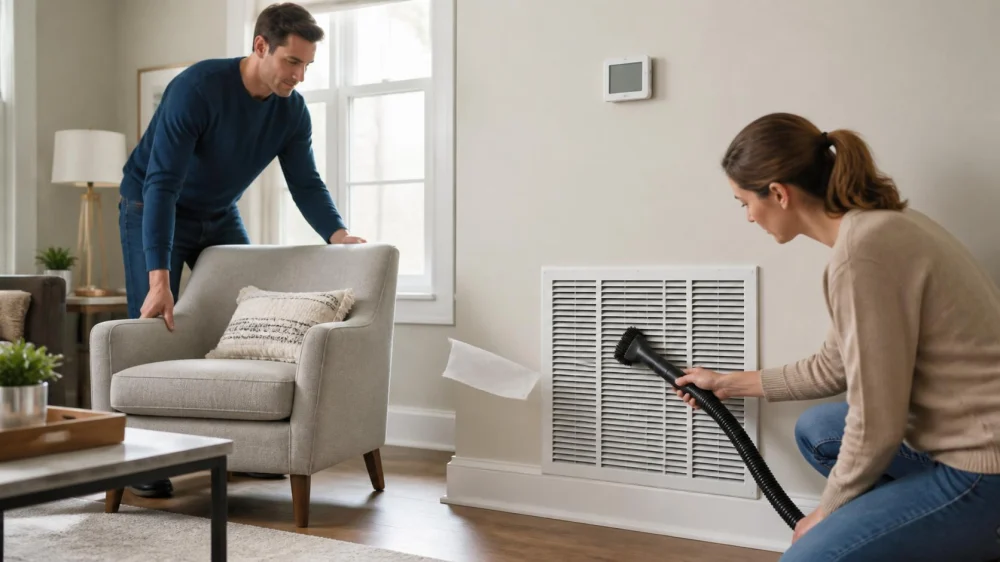
From the room, check whether a sofa, bookcase, bed, curtain, laundry pile, toy bin, picture, rug, or temporary decoration covers the grille. Look for paper or pet hair held against the face while the blower runs. Check every known return, not only the one nearest the thermostat.
Also note interior doors that are usually closed. Some systems depend on transfer grilles, door undercuts, or dedicated returns to move air from closed rooms. Do not cut a door or wall yourself; record whether the comfort problem changes with the door position and share that with a professional.
Create clearance safely
Move lightweight objects and curtains away so the entire grille face is open. For heavy furniture, protect floors, use appropriate help, and avoid lifting beyond your ability. Do not lean a large object temporarily where it can tip or block an exit.
There is no universal clearance distance for every grille and system. Follow manufacturer or installer guidance, or ask the HVAC provider to mark a practical furniture boundary. The objective is an unobstructed approach to the grille, not merely a narrow gap hidden behind the furniture.
Clean only accessible surfaces
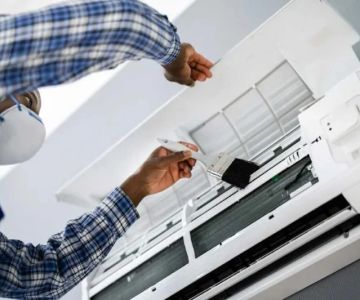
Turn the system off at the normal thermostat control before surface cleaning. Use a vacuum brush or soft cloth on the exposed grille, supporting any removable filter according to its instructions. Keep moisture and cleaning spray away from the opening.
Do not push a vacuum hose, brush, fragrance product, disinfectant, or tool into the duct. Do not unscrew a large grille if it may hold a filter or expose sharp metal, wiring, or an inaccessible cavity. Deep contamination, pests, suspected mold, or damaged duct material requires professional assessment.
Check the filter arrangement
Some return grilles contain a filter; others send air to a filter at the equipment. A home can have one or several approved filter locations. Identify the intended arrangement from labels or service documentation before adding or removing anything.
Use only the specified dimensions and an appropriate filter type. Installing extra filters at every return can restrict airflow, while running without a required filter can contaminate equipment. If a filter is collapsed, wet, heavily loaded, or repeatedly dirty soon after replacement, contact an HVAC professional.
Record system changes
Before moving an obstruction, note the date, outdoor conditions, thermostat settings, room temperatures, door positions, blower sound, and which rooms feel different. Take a photo of the blocked grille. After clearance, keep normal settings and observe for an appropriate period.
Record whether noise, airflow, temperature difference, odor, or cycling changed. Do not keep lowering the thermostat to force a result. A simple before-and-after log helps a technician distinguish a furniture problem from a larger duct, control, refrigerant, or equipment issue.
Avoid damaging airflow shortcuts
Do not close other vents to “push” more cooling into one room, remove grilles, install an improvised booster, or enlarge an opening without a system evaluation. These changes can alter pressure, noise, condensation, and equipment operation in unintended ways.
Avoid taping filters to grilles, using scented sheets on returns, or covering an unattractive vent with artwork. Do not operate a damaged grille with sharp edges where children or pets can reach it. Ask a professional about compatible replacement covers and the effect of any design change.
Know when to stop the system
Turn cooling off at the thermostat and seek prompt professional guidance for burning or electrical odors, smoke, sparking, repeated breaker trips, loud grinding, visible ice, refrigerant-line damage, or water threatening the building. Do not keep restarting the system to see whether it clears.
If a carbon monoxide alarm sounds in a home with fuel-burning equipment, move to fresh air and follow emergency guidance; do not assume the air conditioner caused a false alarm. For breathing difficulty, illness, or immediate danger, call emergency services.
Prepare for HVAC service
Give the technician the equipment model information, filter size and age, thermostat settings, recent changes, symptom timeline, affected rooms, door positions, and before-and-after notes. Clear safe access to returns, thermostat, indoor equipment, electrical panel, and outdoor unit as requested.
Ask the technician to explain the return-air design, approved filter locations, clearance needs, and whether testing shows a pressure or duct problem. Request written findings and keep them with the service invoice. Do not ask for a duct modification based only on a generic online recommendation.
Return vent checklist
- Identify returns using plans, labels, or professional guidance.
- Check every grille for furniture, fabric, rugs, and clutter.
- Move heavy items with help and protect exits and floors.
- Turn the system off before cleaning the grille face.
- Never push tools, cleaners, or fragrances into the duct.
- Confirm the intended filter locations and exact size.
- Record temperatures, settings, doors, noise, and cycling.
- Do not close other vents or alter grilles to compensate.
- Stop for electrical, burning, ice, or water warning signs.
- Share the before-and-after record with the HVAC technician.
A blocked return vent is worth correcting because the fix may be as simple as moving a chair or curtain. Keep the work at the room surface, preserve the approved filter arrangement, and document what changes. If comfort, noise, or cycling remains abnormal, the record you created gives an HVAC professional a clearer starting point without exposing you to duct or equipment hazards.
 Johnson Heating & Cooling Inc4.0 (4 reviews)
 Bentley's Air Conditioning | Lebanon TN4.0 (109 reviews)
 DH Mechanical LLC5.0 (145 reviews)
 BUDGET HEAT AND AIR4.0 (28 reviews)
 Sexton Heating & Air Conditioning5.0 (1 reviews)
 The Comfort Doctor Heating, Air Conditioning, & Refrigeration5.0 (133 reviews)
 How to Repair an Air Conditioner that Won’t Turn Off
 Can You Fix Air Conditioning Without Replacing the Entire System?
 AC Condensate Drain Clogs: Signs and Safe Next Steps
 How Much Does It Really Cost to Fix Air Conditioning Leak?
 How to Fix Air Conditioner Electrical Problems Without Calling a Pro
 How to Diagnose an Air Conditioner Problem Before Calling a Technician