
AC Condensate Drain Clogs: Signs and Safe Next Steps
On this page
Quick answer
Possible AC condensate drain clogs cause standing water in the drain pan, dripping near the indoor unit, a full secondary pan, water stains, musty odours, or a safety switch that shuts cooling off. Turn the system off if water threatens ceilings or electrical parts, contain the leak safely, and call an HVAC technician when the drain, pan, pump, or concealed damage is not clearly accessible.
What the condensate drain does
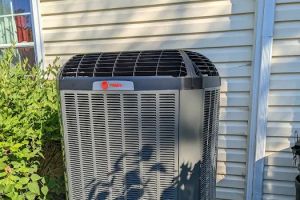
Condensate is water removed from humid indoor air as it passes over the cold evaporator coil. The water should collect in a sloped drain pan and leave through a gravity drain or condensate pump.
A blockage can come from biological buildup, dust, debris, a kinked line, poor slope, a failed pump, or an incorrectly configured trap or vent. Water beside the unit can also come from a frozen coil, plumbing leak, cracked pan, or uninsulated cold surface, so location alone does not prove a clog.
Signs of a blocked drain
- Standing water or debris in the primary drain pan.
- Water in a secondary emergency pan beneath an attic or closet unit.
- Dripping from an emergency drain outlet in a conspicuous location.
- Ceiling, wall, baseboard, or floor staining near the air handler.
- A float switch or wet switch repeatedly stopping the system.
- Gurgling near the drain or water backing up at a service opening.
- Musty odour associated with persistent moisture.
- A condensate pump running continuously, overflowing, or failing to start.
Safe homeowner checks
- Shut cooling off at the thermostat if water is escaping the pan or approaching electrical equipment.
- Keep distance from electricity. Do not touch wet disconnects, wiring, motors, or panels. Use the appropriate breaker only if it is safely accessible and you know which circuit controls the unit.
- Photograph before cleanup. Record water level, stain location, drain route, and thermostat message.
- Check the filter. A severely restricted filter can contribute to coil problems; replace it only with the specified size and orientation.
- Look without opening sealed panels. Note visible kinks, disconnected tubing, a full secondary pan, or an obvious pump alarm.
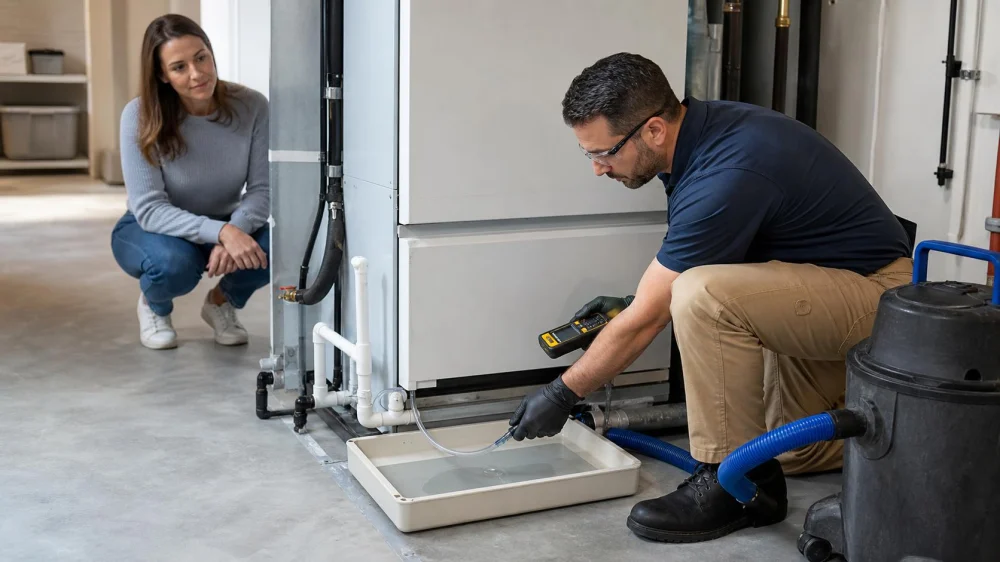
- Contain accessible water. Protect finishes with towels or a wet vacuum only when this does not expose you to electricity or contamination.
Do not pour bleach, acid, compressed gas, or mixed cleaners into an unfamiliar line. Follow the equipment manufacturer’s directions and use the intended service access only.
When to stop and call a technician
- Water is near live electrical components or leaking through a ceiling.
- The air handler is in an attic, crawlspace, or other unsafe access area.
- The safety switch trips again after water is removed.
- The coil is iced, airflow is weak, or refrigerant trouble is suspected.
- The drain pump fails or the line disappears inside a wall.
- The pan is cracked, rusted through, improperly sloped, or repeatedly wet.
- There is extensive visible microbial growth, contaminated water, or wet insulation.
Calling early is best when the system is above finished space. Continuing to run it is not ideal because a small drainage problem can become ceiling or flooring damage.
What a technician may check
A qualified HVAC technician may verify coil and airflow condition, clear and flush the drain using an appropriate method, inspect pan slope and damage, check the trap and vent arrangement, test float switches, test the condensate pump, confirm the discharge location, and look for insulation or air-leakage condensation.
Ask the technician to identify the actual cause, demonstrate free drainage, test the safety controls, and document any damaged building materials. Simply clearing a line may not solve poor slope, a failing pump, or recurring contamination.
Prevention checklist
- Replace or clean the filter on the equipment’s schedule.
- Include the drain pan, line, trap, pump, and shutoff switch in seasonal service.
- Keep the indoor unit and service access unobstructed.
- Do not store items in a secondary pan or against drain tubing.
- Watch the emergency outlet during humid weather.
- Fix water damage promptly and dry wet materials.
- Keep dated service records and photos of the drain configuration.
Limitations and important notes
Drain designs vary among central air conditioners, heat pumps, furnaces with cooling coils, mini-splits, portable units, and local code requirements. Some units need a trap, vent, pump, overflow switch, or secondary drain; others use different arrangements. Use the model-specific manual.
Do not reset safety devices repeatedly. Seek emergency help for electrical arcing, smoke, a burning smell, ceiling collapse risk, or water contacting a service panel. Mold assessment and cleanup may require a qualified professional, especially for large or hidden areas.
Frequently asked questions
Can a clogged AC drain make the system stop cooling?
Yes. A float or wet switch may intentionally interrupt operation before the pan overflows. Other faults can also stop cooling, so do not bypass the switch.
Is water in the secondary pan normal?
No. The secondary pan is protective. Water there indicates a primary drainage, pan, coil, or condensation issue that should be investigated.
Can I use bleach in the drain line?
Do not assume it is compatible. Equipment, pipe, pump, and manufacturer instructions differ, and mixing cleaners is dangerous. Use only an approved procedure.
Does a musty smell prove there is mold?
No. It is a reason to inspect for moisture, but identification may require professional assessment. Correct the water source rather than masking the odour.
Sources and evidence notes
The moisture-control advice follows the U.S. EPA’s HVAC moisture guidance, which says condensate pans should drain properly and standing water or debris requires attention, and its home moisture guide. Equipment-specific service follows the manufacturer.
Next steps
Turn cooling off if active water threatens the building, photograph the pan and leak path, and keep clear of electricity. Give the technician the model, symptom timeline, thermostat message, filter history, and photos, then request a drainage and safety-control test before restarting normal operation.
 HUAGUI HVACR LLC5.0 (8 reviews)
 Torcam hvac Llc.5.0 (6 reviews)
 Heritage Heat and Air3.0 (3 reviews)
 Atteberry & Marshall Heating & Air4.0 (249 reviews)
 Sam Peters Heating and Air LLC4.0 (9 reviews)
 Daniel Vinson Service Company5.0 (4 reviews)
 Best Services: Where to Get My AC Fixed Near You Today
 Best Practices for a Successful and Affordable AC Fix
 Experts Explain How to Fix Air Conditioning Like a Pro
 Top Ways to Fix Your AC Quickly and Affordably in Your Area
 How to Find Who Can Fix My Air Conditioner Without Spending a Fortune
 How to Solve Refrigerant Leaks in Your Air Conditioning System