
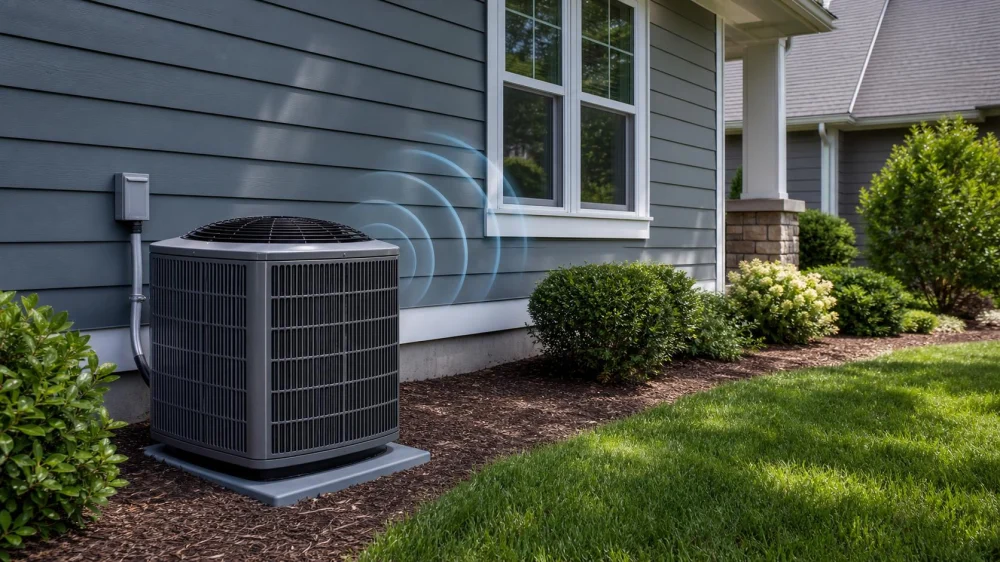
AC Noises Explained: What to Record and When to Stop
On this page
Quick answer
An unfamiliar AC noise is most useful when you record where it comes from, when it begins, how long it lasts and what the system is doing at that moment. A brief airflow change or refrigerant equalization sound may be normal; grinding, metal impact, loud electrical buzzing, hissing with poor cooling or a rapidly worsening vibration needs professional assessment. Shut the system down for smoke, burning odour, sparking, a stalled fan or severe mechanical noise.
Comfort By Design - AC Repair, Heater Repair, Air Conditioning Contractor
D'IbervilleHarrison CountyMississippi
5098 W Gay Rd, D'Iberville, MS 39540, USA
Normal versus abnormal AC sound
An abnormal HVAC noise is a new, persistent or worsening sound that differs from the equipment's established start, run and shutdown pattern. Loudness alone does not identify the cause.
Central air conditioners commonly produce airflow, a fan hum, a compressor tone, duct expansion and brief control clicks. Heat pumps may also change sound during mode transitions or defrost. The equipment manual may describe normal sequences. Concern increases when a sound appears with weak airflow, poor cooling, odour, ice, water, repeated stopping or electrical protection trips.
Best Air Heating and Cooling Plus
Peachtree CityFayette CountyGeorgia
23 Eastbrook Bend, Peachtree City, GA 30269, USA
Sound-by-sound guide
Buzzing or humming
A steady low operating hum may be normal. A new loud buzz, especially if a fan is not turning or the system will not start, can involve electrical or motor components. Do not reach through a grille or open a panel.
Clicking
One or two control clicks during startup and shutdown may be expected. Repeated rapid clicking can indicate a control, power or safety interruption that needs diagnosis.
Rattling or vibration
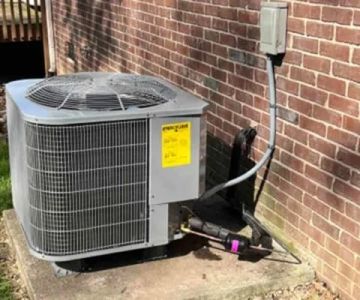
Loose exterior debris, an unsecured grille, duct movement, mounting issues or internal wear can rattle. Only remove objects that are on the ground and safely away from equipment; do not tighten panels while energized.
Squealing, screeching or grinding
High-pitched or grinding sounds may involve a blower, fan, motor, bearing, belt on applicable equipment or contact between moving parts. Continuing to run the system can increase damage.
Hissing, bubbling or gurgling
Some brief pressure equalization or condensate movement may be normal. Persistent hissing with reduced cooling, oily residue or ice may involve the refrigerant circuit; bubbling can also relate to drainage. Refrigerant work requires qualified service.
Banging, thumping or metal impact
A severe repetitive impact can indicate a loose or failing moving component. Turn the system off rather than waiting for the noise to disappear.
Whistling
Air moving through a restricted filter, closed register, duct leak or undersized opening can whistle. Do not block more registers to test it; that can change system pressure.
Safe observation checklist
- Stay clear of moving equipment. Listen from a normal occupied area or stable ground.
- Identify the zone. Note whether the sound is near the thermostat, return grille, supply register, indoor unit, duct or outdoor unit.
- Record the sequence. Mark whether it happens at startup, during steady cooling, at shutdown or when only the fan runs.
- Capture a short recording. Include a few seconds before and after the sound without placing the phone near moving parts.
- Check visible surroundings. Look for outdoor branches, loose ground debris, blocked grilles, water or ice without touching equipment.
- Inspect the user-accessible filter. Follow manufacturer instructions and use the specified replacement size and type.
- Note companion symptoms. Record thermostat alerts, weak airflow, temperature change, odour and breaker trips.
Best for homeowner observation: location, timing and safe visible conditions. Not suitable for DIY diagnosis: energized measurements, capacitor tests, fan access, refrigerant pressure checks or panel removal.
When to stop the system
- Smoke, sparking, burning or melting odour.
- Grinding, repeated metal impact or a fan contacting its housing.
- A loud buzz while the motor or fan appears stalled.
- Severe vibration, equipment movement or a damaged fan guard.
- Water near electrical equipment or a breaker that trips again.
- Suspected refrigerant exposure in an enclosed area, particularly with dizziness or breathing irritation.
Use the thermostat to turn cooling off if safe. Use a clearly identified service disconnect only as directed by the equipment instructions or a professional. Do not repeatedly restart the system. Leave the area and contact emergency services for fire, significant smoke or an immediate health hazard.
Prepare useful information for service
- Equipment type and model information visible without removing a panel.
- The first date and conditions when the noise appeared.
- A short audio or video recording and the sound location.
- Thermostat mode, setpoint and any displayed alert.
- Whether cooling and airflow changed at the same time.
- Recent filter change, storm, power interruption or work near the equipment.
- Any shutdowns or protection-device trips.
Ask the technician to reproduce or identify the sound, show the associated finding, explain test results against manufacturer specifications and separate urgent work from optional maintenance. Verify locally applicable licensing and insurance and obtain a written scope.
What not to do
- Do not insert an object through a grille to stop or spin a fan.
- Do not remove an electrical or blower panel while equipment is connected to power.
- Do not spray lubricant, cleaner or water into a motor, coil or electrical compartment.
- Do not bypass a door switch, float switch, pressure control or breaker.
- Do not add refrigerant or use a leak-sealing product as a sound test.
- Do not assume an online sound sample proves which part has failed.
Evidence and limitations
This guide reflects broad HVAC safety and diagnostic practice: describe the operating sequence, pair sound with measurable symptoms and preserve safety controls. Exact normal sounds, allowable vibration and test values depend on the equipment manufacturer and installation.
A recording can help reproduce an intermittent condition but cannot confirm the component remotely. Electrical, mechanical and refrigerant work may be regulated and should be performed by appropriately qualified U.S. professionals.
Frequently asked questions
Is a click when the AC starts normal?
A brief control click can be normal. Repeated clicking, failed starts or clicking paired with a breaker trip should be assessed.
Why does my AC whistle after a filter change?
The filter may be the wrong size, installed incorrectly or too restrictive for the system, or the sound may expose an existing air leak. Use only manufacturer-compatible specifications and seek airflow testing if it persists.
Can leaves make an outdoor unit rattle?
Loose debris nearby can contribute, but do not reach inside the unit. Turn it off and let a technician safely remove internal debris or check fan clearance.
Does hissing always mean a refrigerant leak?
No. Brief pressure equalization and airflow can hiss. Persistent hissing with poor cooling, ice or oily residue deserves professional refrigerant-circuit assessment.
Can I keep running the AC if it is noisy but still cools?
Not when the noise is grinding, impacting, electrically buzzing or rapidly worsening. For a mild new sound, document it and arrange service rather than waiting for secondary damage.
Next steps
Make a safe recording, note the exact operating stage and check only accessible filters, grilles and surroundings. Stop the system for electrical, severe mechanical or water hazards. Otherwise, schedule qualified service and provide the timeline and recording so the technician can reproduce the condition efficiently.
 Stanford&Sons Ac Electric Repair and Install llc4.0 (76 reviews)
 Cannell Air Conditioning & Heating5.0 (23 reviews)
 Hollandsworth Heating and Air5.0 (16 reviews)
 Ken Vaughn's Home Comfort Services4.0 (9 reviews)
 Family Heating and Air4.0 (22 reviews)
 Clark Heating & Cooling, Inc.4.0 (673 reviews)
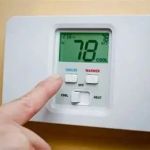 How to Fix a Faulty Thermostat in Your Air Conditioner
 How to Prepare for an AC Service Appointment: What You Should Know
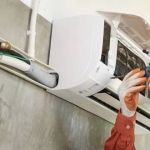 How to Maintain Your Air Conditioner’s Fan for Smooth Operation
 Affordable Companies That Can Fix My Air Conditioner Near You
 Top Ways to Get My AC Fixed Quickly and Affordably in Your Area | AC Fix
 How Long Should It Take to Fix Air Conditioner? | AC Fix