

AC Service Invoice: Model, Parts, and Warranty Records
On this page
- Quick answer
- Confirm the job and equipment identity
- Separate symptoms from diagnosis
- Identify every installed part
- Understand labour and fees
- Confirm post-repair checks
- Read warranty terms before relying on them
- Distinguish urgent work from optional recommendations
- Build a useful equipment history
- Limits and important notes
- Frequently asked questions
- Sources and evidence notes
- Conclusion and next steps
Quick answer
An AC service invoice should identify the customer, service address, visit date, contractor, equipment model and serial details, reported symptoms, tests performed, findings, exact parts and quantities, labour, fees, taxes, payment status, and warranty terms. It should distinguish completed work from recommendations and note operating checks after repair. Review it before the technician leaves, ask about unclear abbreviations or exclusions, and store it with estimates, photos, manuals, permits, and earlier service records.

Confirm the job and equipment identity
Check the service address, unit location, visit date, work-order number, technician or company, and contact details. A property may have multiple condensers, air handlers, furnaces, thermostats, or zones, so the record should make the repaired system clear.
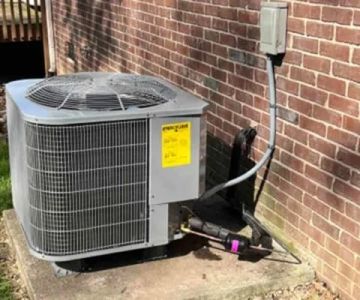
Compare model and serial information with the equipment label when safely accessible. Do not remove panels or reach into equipment merely to read a label; ask the technician to photograph it.
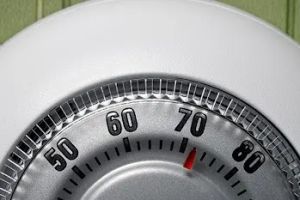
Anderson's Heat & Air Of N.E.A
1014 Highland Ave, Newport, AR 72112, USA
Separate symptoms from diagnosis
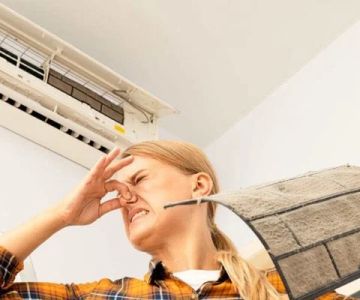
The invoice should capture what the customer reported, such as no cooling, intermittent shutdown, noise, odour, water, uneven temperature, or high energy use. It should then state what the technician found rather than presenting the complaint as proof of cause.
Ask which tests supported the diagnosis and what could not be tested. Weather, intermittent behaviour, or an unavailable part may limit conclusions during one visit.
Identify every installed part
- Part description, quantity, and identifying number where appropriate.
- New, rebuilt, supplied-by-customer, or temporary status.
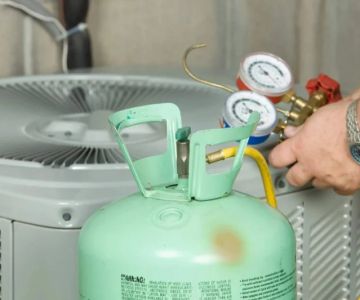
- Related materials such as refrigerant, wire, drain fittings, or sealant.
- Whether the removed part was returned, recycled, or retained for a claim.
- Compatibility or manufacturer authorization when warranty terms require it.
Understand labour and fees
Review diagnostic charges, flat-rate or hourly labour, travel, after-hours service, permits, disposal, delivery, maintenance-plan discounts, and taxes. Ask whether diagnostic fees were credited to repair and which charges could recur on a return visit.
A total alone makes later comparison and warranty review difficult. Request enough detail to understand what was purchased without expecting proprietary internal pricing formulas.
Confirm post-repair checks
The record should note whether the system started, ran, drained, and responded to controls after the work, plus relevant measured results and conditions. Ask whether all panels, disconnects, valves, covers, and work areas were restored.
If the repair could not be completed, the invoice should say what remains, whether operation is safe, and what temporary limitations or shutdown instructions apply.
Read warranty terms before relying on them
- Separate manufacturer part coverage from contractor labour coverage.
- Record start and end dates or the rule used to calculate them.
- Check registration, maintenance, transfer, and notice requirements.
- Ask what travel, refrigerant, shipping, diagnostic, or access costs are excluded.
- Keep proof of payment and authorization.
- Confirm who to contact first if the symptom returns.
Distinguish urgent work from optional recommendations
Ask the technician to classify safety issues, work needed for reliable operation, maintenance, efficiency suggestions, code or permit items, and future monitoring. Each recommendation should identify evidence and timing rather than use vague alarm.
For major work, seek a written estimate and a second opinion when practical. Do not operate equipment the technician has identified as unsafe merely to obtain another quote.
Build a useful equipment history
Store invoices by system and date with estimates, approvals, model-label photos, thermostat changes, filter records, permits, refrigerant records, warranties, and maintenance reports. A simple timeline helps a future technician see recurring patterns.
Redact payment details, access codes, signatures, and personal information before sending records outside the household or property-management team.
Limits and important notes
An invoice documents what a provider states occurred; it does not by itself prove code compliance, warranty coverage, or future performance. Requirements vary by equipment, jurisdiction, refrigerant, permit, licence, and contract.
This article is general US consumer guidance, not legal, tax, engineering, or HVAC repair advice. Contact the contractor promptly about errors and use applicable licensing, warranty, payment, or consumer channels when a dispute remains.
Frequently asked questions
Should the invoice list the old part?
It should identify what was replaced. Whether the old item can be returned may depend on warranty, core-return, hazardous-material, and company rules.
What if the model number is wrong?
Ask for a corrected record immediately, especially when warranties, permits, or multiple units are involved.
Is a paid receipt enough for warranty service?
Keep it, but also retain the detailed work description, equipment identity, part information, warranty terms, and any required registration.
Sources and evidence notes
This article applies general service-record, consumer-contract, equipment-identification, warranty, and HVAC documentation principles. The signed authorization, contractor terms, manufacturer warranty, local licensing rules, payment provider, and actual service record govern a specific job.
Conclusion and next steps
Before the technician leaves, match the invoice to the correct system and read the findings, parts, completion status, charges, and warranty. Correct factual errors promptly. File the final paid record in a single equipment timeline so the next service decision begins with reliable history.
 Paschal Air, Plumbing & Electric4.0 (12 reviews)
 Anderson's Heat & Air Of N.E.A5.0 (1 reviews)
 Indoor Comfort Team4.0 (568 reviews)
 AZS Heating & Cooling4.0 (36 reviews)
 Vitt Heating & Cooling4.0 (1005 reviews)
 Level 9 Heating, Cooling, and Plumbing4.0 (470 reviews)
 AC Service Invoice: Model, Parts, and Warranty Records
 AC Filter Size Check: Labels, Fit, and Replacement Record
 AC After a Power Outage: Check Before Restarting
 AC Outdoor Unit Clearance: Observe Before You Trim
 AC Warranty Claim: Gather Records Before You Call
 One Room Stays Warm With AC On: Checks Before Service