
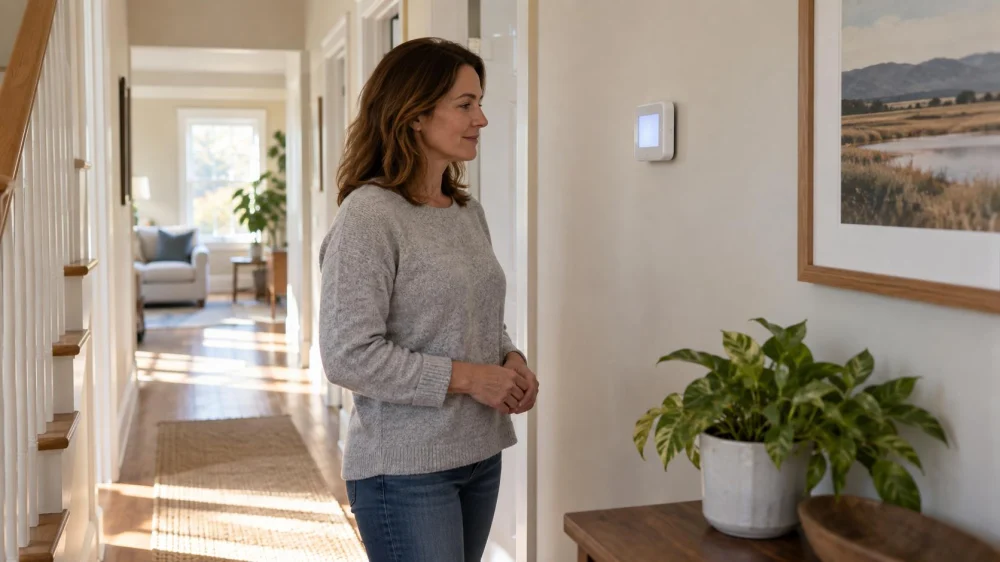
AC After a Power Outage: Check Before Restarting
On this page
Quick answer
After power returns, check for water exposure, storm damage, electrical smells, and unstable household power before using your air conditioner. If the surroundings are dry and undamaged, review the thermostat settings and follow the equipment manual’s restart instructions. Allow its normal protective delay instead of switching it repeatedly. Stop and seek qualified help if cooling fails, unusual symptoms appear, or a breaker trips.
This guide is for US homeowners checking ordinary household cooling after an outage. Renters should report damage and equipment faults to the property manager. It does not cover electrical repairs, flood recovery, or generator installation.

Screen for hazards first
A restart delay is a built-in pause that prevents equipment from restarting immediately; its behavior depends on the thermostat and air conditioner. A delay message alone does not identify a damaged component.
Before touching a control, look from a safe, dry position. Do not approach fallen wires, standing water near electrical equipment, or a visibly damaged unit. Flood-exposed equipment needs professional assessment before reuse, even if its exterior now looks dry. Smoke, sparks, or a fire require emergency action rather than troubleshooting.
- Check whether lights and other household devices are operating steadily. If power remains intermittent, consult the utility and leave cooling off using an accessible, safe control.
- Look for obvious displaced panels, branches on equipment, or new water damage without opening cabinets.
- Notice any hot electrical or burning odor. Do not continue a trial run to identify its source.
- If a gas odor is present, leave the area and contact the gas emergency service from a safe location; do not operate electrical switches nearby.
Check the controls without repeated resets
When there are no visible hazards, review the owner’s instructions for your specific equipment. A central system, ductless unit, and portable air conditioner may respond differently to restored power. Do not apply a generic reset sequence to every model.
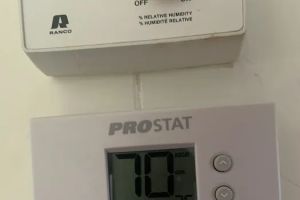
- Check that the thermostat display is active. Record any error message before changing anything.
- Review cooling mode, the target temperature, and the programmed schedule. An outage may have affected a clock or previously selected setting.
- Use a normal, modest cooling setting below the current room temperature. An extremely low setting is not a useful way to diagnose startup.
- Allow any delay described in the manual or displayed by the thermostat to finish. Avoid toggling modes or power repeatedly.
- If the thermostat remains blank or equipment remains silent, report the observation. Do not open an electrical compartment or replace a fuse as a diagnostic experiment.
Viewing an accessible breaker label is different from repairing a power fault. If a breaker is tripped, leave it off when there is damage, moisture, an unexplained electrical symptom, or uncertainty about the circuit. Never repeatedly reset a breaker, bypass protection, or increase a fuse rating.
All About Air Conditioning - An Elevate Home Services Company
641 4th St SE, Naples, FL 34117, USA
Observe one normal restart
Stay clear of moving parts and listen from a safe distance. Record whether the indoor fan starts, whether the outdoor unit appears to run, and whether air begins to feel cooler after the normal startup period. Room temperature can recover gradually after a hot outage; one room thermometer reading is not a diagnosis.
Do not remove panels to find out why one part runs while another does not. Indoor airflow with no cooling can have several causes. An outage occurring before a fault does not prove that a surge damaged the compressor.
Stop cooling if there is persistent abnormal buzzing, repeated failed starts, new leakage threatening the building, ice, or an electrical smell. Choose professional inspection rather than another reset. Never touch exposed wiring or attempt capacitor, refrigerant, or contactor work.
Decide when to request professional help
Routine observation is best for an undamaged, dry system that resumes normal operation. It is not ideal for flood exposure, electrical faults, or persistent cooling failure. Contact the utility for ongoing supply problems, a qualified electrician for household electrical damage, and an HVAC professional for equipment diagnosis. Tell each provider if flooding or storm damage occurred.
Prepare a short timeline: outage start, power restoration, thermostat message, attempted settings, and symptoms. Include the accessible model information and photographs taken from a safe position. Ask what needs inspection before the system is energized, what diagnosis supports the proposed repair, and how operation will be verified afterward. AC Fix is a resource and service-discovery platform; confirm a provider’s qualifications and service scope directly.
Frequently asked questions
How long should I wait before restarting?
Use the instructions for your model and any thermostat delay indicator. There is no single waiting period that proves all equipment is safe. Damage or flood exposure overrides an ordinary restart procedure.
Should I reset a breaker every time the AC will not start?
No. A breaker can signal a fault. Repeated resets are not a repair, and a breaker that trips again needs professional evaluation.
Can I run central AC from a portable generator?
Do not improvise a connection. Suitability depends on equipment demand and a properly designed electrical connection. Have a qualified professional assess the arrangement and follow generator safety instructions.
Sources and important limits
The American Red Cross power-outage guidance supports avoiding flooded electrical equipment and obtaining qualified inspection. Carrier’s AC startup troubleshooting guidance discusses controls and protective electrical interruptions. These are general references, not a model-specific clearance to restart. Your equipment manual, utility notices, and professional assessment govern the actual situation.
Next steps
Start with the hazard check, then review controls and permit one normal startup only when conditions are safe. If the result is uncertain, leave the equipment off and share your timeline with a qualified provider. Keep the manual and service contact accessible before the next outage.
 Pinnacle Air Solutions Inc4.0 (12 reviews)
 Steve's Heating & Air LLC0.0 (0 reviews)
 Pleasant Run A/C & Heat, LLC4.0 (210 reviews)
 Enervise4.0 (13 reviews)
 Cook's Comfort Systems, Inc.4.0 (572 reviews)
 Shogun Services5.0 (15 reviews)
 How to Solve Electrical Problems in Your Air Conditioner Unit | Ac Fix
 Experts Explain How to Get My AC Fixed Like a Pro
 Where to Fix AC Condenser in Emergency Situations
 How to Fix Your Air Conditioning Without Breaking the Bank
 AC Condensate Drain Clogs: Signs and Safe Next Steps
 2025 Trends: How People Are Choosing to Fix Air Conditioning Now