
AC Outdoor Unit Clearance: Observe Before You Trim
On this page
Quick answer
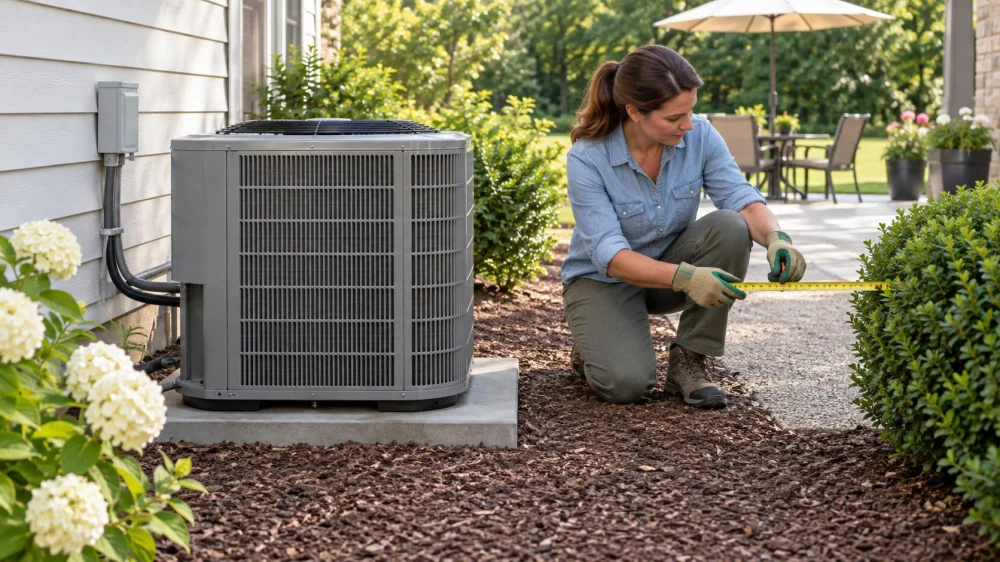
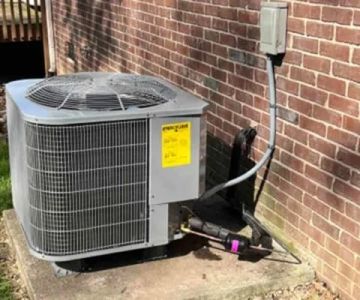
With the system off at the thermostat, inspect the outdoor AC unit from outside its cabinet. Photograph leaves, vines, fences, stored items, mulch, snow, or shrubs that may restrict airflow or service access. Follow the manufacturer’s required clearances rather than a universal number. Pick up loose debris around—not inside—the unit, and trim plants only when you can avoid refrigerant lines, wiring, fins, and the cabinet. Call an HVAC professional for internal debris, damage, instability, or unsafe access.
Automotive CV Express
ClarksvilleMontgomery CountyTennessee
1329 Fort Campbell Blvd, Clarksville, TN 37042, USA
Inspect from outside the equipment
Walk around the unit in daylight. Look for vegetation touching the cabinet, discharge air blocked above or beside it, recirculation between nearby units, and a service panel that a technician cannot reach.
Check the pad from the ground for obvious settling, erosion, standing water, animal activity, or impact. Do not push, level, or lift the unit; attached refrigerant and electrical lines can be damaged.
Photograph the nameplate from outside only if it is accessible without reaching through guards. Use the model to find current installation and clearance instructions.
Allen Mechanical Inc
GreenvilleGreenville CountySouth Carolina
213 S Washington Ave, Greenville, SC 29611, USA
Remove only low-risk obstructions
Move patio items, toys, bags, and loose yard debris that are clearly separate from the equipment. Rake away from the cabinet so material is not driven through the coil guard.
Hand-trim soft vegetation at a safe distance with the system off, keeping tools away from the cabinet, disconnect, wiring, tubing, and drain. Hire qualified help for trees, heavy branches, poison plants, pests, or growth intertwined with equipment.
Do not pressure-wash coils, remove panels or guards, bend fins, spray chemicals, cover a running unit, or reach into the fan area.
Know when service is needed
Arrange professional inspection for unusual noise, vibration, repeated shutdown, visible oil residue, damaged tubing, crushed fins, burnt odor, electrical damage, a shifted unit, or debris inside the guard.
Tell the technician what changed in the yard and share photos. Ask whether landscaping, drainage, or fencing changes should occur before service.
Maintain a clear, stable route for the technician, but do not hide evidence by deep cleaning the equipment.
Use a safe yard checklist
- Turn cooling off at the thermostat and wait for the fan to stop.
- Keep children and pets away from the work area.
- Photograph all sides without opening the cabinet.
- Find model-specific clearance and service-access requirements.
- Move only separate, lightweight objects.
- Trim only vegetation that can be reached without touching equipment.
- Check the pad and nearby drainage from the ground.
- Restore the area, then call for service if any damage is visible.
Limitations and urgent boundaries
This guide does not authorize electrical, refrigerant, internal cleaning, coil, fan, or structural work. Equipment designs and required clearances vary, and local code may apply.
Stay away and call for help for exposed wiring, sparks, smoke, fire, hissing with suspected refrigerant damage, severe storm damage, or an unstable unit. Use emergency services when there is immediate danger.
Sources and evidence notes
The approach follows manufacturer-first HVAC maintenance and electrical safety: maintain specified airflow and service space, keep guards in place, avoid internal and energized components, protect connected lines, and refer damage or cleaning inside the cabinet to qualified service.
Frequently asked questions
How much clearance does my unit need?
Use the exact manufacturer and installation instructions; layout and discharge direction differ.
Can I wash it with a hose?
Do not assume so. Cleaning method and electrical protection are unit-specific; ask a qualified technician.
Can plants hide the unit?
Only if required airflow, discharge, access, and manufacturer clearances remain available through plant growth.
Should I cover it?
Follow the manufacturer’s seasonal guidance. An inappropriate cover can trap moisture or obstruct operation.
Can I level a tilted unit?
Do not lift or shift it yourself. Have the pad, lines, and unit assessed.
Conclusion and next steps
Observe the cabinet, airflow path, service route, vegetation, and pad without opening or moving equipment. Use model-specific clearances, remove only separate low-risk obstructions, and keep tools away from lines and wiring. Give internal debris, damage, instability, or uncertain conditions to a qualified HVAC professional.
 Pinnacle Air Solutions Inc4.0 (12 reviews)
 Steve's Heating & Air LLC0.0 (0 reviews)
 Pleasant Run A/C & Heat, LLC4.0 (210 reviews)
 Enervise4.0 (13 reviews)
 Cook's Comfort Systems, Inc.4.0 (572 reviews)
 Shogun Services5.0 (15 reviews)
 How to Solve Electrical Problems in Your Air Conditioner Unit | Ac Fix
 Experts Explain How to Get My AC Fixed Like a Pro
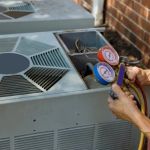 Where to Fix AC Condenser in Emergency Situations
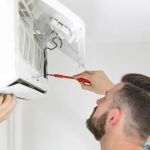 How to Fix Your Air Conditioning Without Breaking the Bank
 AC Condensate Drain Clogs: Signs and Safe Next Steps
 2025 Trends: How People Are Choosing to Fix Air Conditioning Now