
AC Frozen Coil: Stop Cooling, Protect Water, and Call
On this page
Quick answer
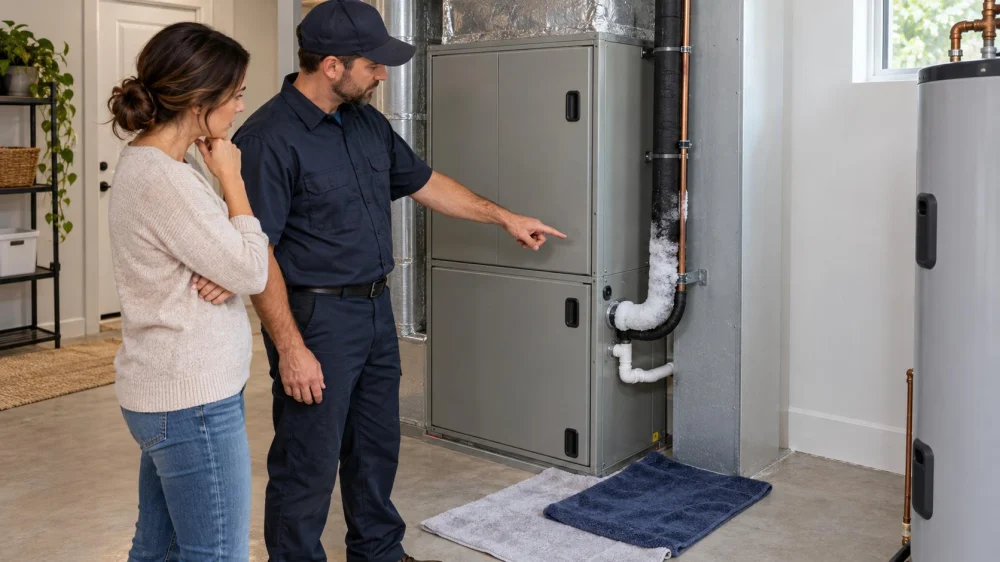
If you see ice on an AC refrigerant line or indoor coil, turn the thermostat’s cooling mode off and protect nearby floors from meltwater. Use the fan only if the manufacturer or HVAC professional says it is appropriate, and do not chip, heat, or puncture ice. Check only the accessible filter and open vents, then call a qualified technician to diagnose airflow, drainage, controls, coil, or refrigerant problems.

Recognise the signs
Possible clues include weak airflow, warm supply air, long run times, water near the indoor unit, visible frost on an insulated copper line, or ice behind an accessible panel. The outdoor unit may continue running even while the home does not cool.
Do not remove service panels to confirm ice. Electrical parts, sharp fins, moving equipment, condensate, and refrigerant are professional hazards.
Anderson's Heat & Air Of N.E.A
1014 Highland Ave, Newport, AR 72112, USA
Safe first steps
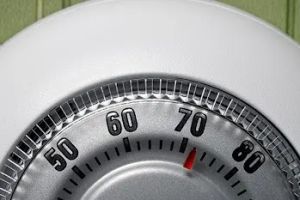
- Set cooling to off using the normal thermostat control.
- If there is burning smell, smoke, sparking, or repeated breaker trip, shut down as instructed and seek urgent service.
- Place towels or a shallow pan only where they will not contact wiring or block equipment.
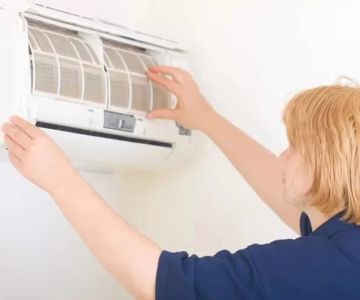
- Check the visible filter against the correct size, direction, and replacement schedule.
- Open normal supply and return grilles that were accidentally closed or blocked.
- Contact an HVAC professional and follow its thaw instructions.
Record useful clues
Photograph visible ice and water from a safe distance. Note thermostat setting, indoor and outdoor temperature, humidity, filter date and model, which rooms have weak air, when icing appeared, recent maintenance, power events, unusual sounds, and whether the condensate pump or drain alarm activated.
Do not restart the system merely to reproduce the problem.
Possible causes
Restricted airflow can result from a loaded or wrong filter, blocked return, closed supply registers, dirty coil, blower problem, collapsed duct, or zoning issue. Controls, drainage, outdoor conditions, refrigerant charge, metering devices, or a refrigerant leak can also contribute. Visible ice alone does not identify the cause.
What to avoid
- Chipping ice with a tool or bending coil fins
- Using a hair dryer, heat gun, boiling water, or flame
- Running cooling while ice remains
- Opening refrigerant lines or adding refrigerant
- Resetting breakers repeatedly
- Pouring chemicals into the drain without instructions
Prepare for service
Clear safe access, contain pets, and bring model, serial, filter, invoice, warranty, and prior repair records. Ask the technician to document measured airflow or static pressure, filter and duct findings, coil condition, blower operation, drain performance, temperatures, refrigerant diagnostics, leak testing, proposed repair, and restart verification.
Frequently asked questions
Can I run only the fan?
Sometimes it helps thawing, but follow the system manual or technician because water, controls, and duct conditions vary.
How long will thawing take?
It may take hours. Do not force it or restart before the system is fully assessed.
Does a clean filter rule out airflow trouble?
No. Grilles, ducts, blower, coil, zoning, and filter fit can still restrict flow.
Is low refrigerant always the cause?
No. Diagnosis requires measurements, and refrigerant work belongs to a qualified technician.
Sources and notes
The U.S. Department of Energy's home cooling guide notes that clogged filters restrict airflow, evaporator coils require inspection and cleaning, and refrigerant leaks or recharge should be handled by trained technicians.
Next steps
Turn cooling off, protect the area from meltwater, check only accessible airflow items, document symptoms, and arrange qualified service. Do not chip ice, apply heat, open panels, handle refrigerant, or keep restarting the system.
 Paschal Air, Plumbing & Electric4.0 (12 reviews)
 Anderson's Heat & Air Of N.E.A5.0 (1 reviews)
 Indoor Comfort Team4.0 (568 reviews)
 AZS Heating & Cooling4.0 (36 reviews)
 Vitt Heating & Cooling4.0 (1005 reviews)
 Level 9 Heating, Cooling, and Plumbing4.0 (470 reviews)
 AC Return Air Vent: Furniture, Dust, and Service Questions
 AC Frozen Coil: Stop Cooling, Protect Water, and Call
 AC Service Invoice: Model, Parts, and Warranty Records
 AC Filter Size Check: Labels, Fit, and Replacement Record
 AC After a Power Outage: Check Before Restarting
 AC Outdoor Unit Clearance: Observe Before You Trim