
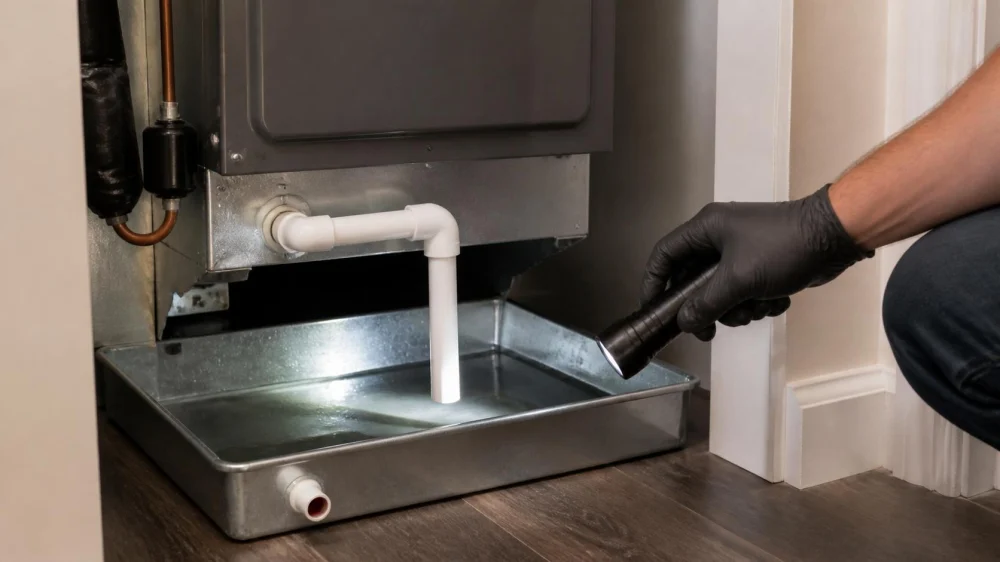
Water in Your AC Drain Pan: Safe Checks Before Overflow
On this page
Quick answer
Water in an AC drain pan usually means condensate is not leaving the system as intended. Turn cooling off if the pan is close to overflowing, water is reaching electrical parts, or ceilings and walls are getting wet. You can safely document the water level and inspect visible drain openings, but clogged lines, damaged pans, and recurring leaks need an HVAC professional.
This guide is for United States homeowners who can reach an indoor air handler or furnace area without opening electrical compartments. It does not apply when access requires a ladder in an unsafe location, removal of sealed panels, or contact with wiring, refrigerant tubing, mold-like growth, or contaminated water.
Why water collects in an AC drain pan
An air conditioner removes moisture from indoor air as warm air passes over the cold evaporator coil. That moisture becomes condensate, which should drip into a primary pan and flow through a drain line. A drain pan is a shallow tray designed to collect this condensation and direct it away from the equipment.
A thin, temporary film of water may appear while the system is running, depending on the equipment design. A rising level, standing water that remains after cooling stops, or water in a secondary emergency pan is a warning that drainage may be restricted or another fault is present.
Common causes include:
- A restricted condensate line. Dust, biological buildup, or debris can slow water leaving the pan.
- A displaced or poorly sloped drain connection. Water may collect when piping cannot drain by gravity as designed.
- A damaged or corroded pan. Cracks, holes, and failed seams can let water escape before it reaches the drain.
- A frozen evaporator coil. Melting ice can release more water than the drain can manage. A frozen coil is a separate symptom that needs diagnosis.
- A failed condensate pump. Some installations rely on a small pump where gravity drainage is not practical.
- Improper installation or equipment position. A unit or pan that is not set correctly may send water away from its intended outlet.
The best next step depends on where the water is, whether its level is rising, and whether the system has shut itself off. A float switch may stop cooling to prevent damage. Repeatedly bypassing or resetting that safety device can turn a manageable drain issue into water damage.
Home Services at The Home Depot
StatesvilleIredell CountyNorth Carolina
240 Turnersburg Hwy, Statesville, NC 28625, USA
Safe checks you can make
Use this checklist only when the equipment is easy to reach and the surrounding floor is dry enough to stand on safely.
- Set the thermostat to Off. This stops active cooling while you assess the area. If water is near electrical components or the equipment is making unusual sounds, leave the system off.
- Keep clear of electricity. Do not touch switches, plugs, wiring, control boards, motors, or wet metal surfaces. If safe isolation requires electrical knowledge, call a qualified professional.
- Identify the water location. Note whether water is in the internal primary pan, an external emergency pan beneath the unit, on the floor, or staining a ceiling. Do not remove a service panel just to see the internal pan.
- Mark or photograph the level. A time-stamped photo helps show whether the water is rising. Record when cooling stopped, whether a float switch tripped, and whether the thermostat still calls for cooling.
- Look at visible drain piping. From outside the cabinet, check for a disconnected PVC joint, sagging pipe, visible damage, or water around a fitting. Do not pull on glued joints.
- Check the outdoor drain outlet only if you know its location. Lack of dripping during humid cooling weather can support a blockage diagnosis, but flow varies with humidity and run time. Do not invent an outlet location or probe an unfamiliar pipe.
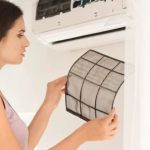
- Check the filter without entering a wet area. A severely dirty or collapsed filter can reduce airflow and contribute to coil icing. Replace it only with the correct size and airflow direction, and only if the filter compartment is dry and normally homeowner-accessible.
- Arrange service if water returns. Even if the pan drains after the system is off, recurrence points to a restriction, pump issue, pan defect, coil icing, or installation problem that needs a full inspection.
Place a container under an obvious active drip only when you can do so without touching the unit or creating a trip hazard. Protecting the floor is temporary damage control, not a repair. For attic equipment, avoid walking outside proper decking; a ceiling leak is not worth a fall through drywall.
What not to do
- Do not keep running the AC while an emergency pan is filling or water is spreading.
- Do not bypass a float switch, hold it down, or repeatedly reset the system.
- Do not open electrical compartments or work around wet wiring.
- Do not pour bleach, strong drain cleaner, or an unapproved chemical into the line. Chemicals can damage components, react with residues, or create exposure risks.
- Do not use high-pressure air without knowing the drain layout. Pressure can separate fittings or send debris and water into the equipment.
- Do not assume every nearby PVC pipe is an AC drain. Condensing furnaces, water heaters, and other equipment may have separate drains.
- Do not treat a cracked or rusted pan with tape or sealant as a permanent repair.
A homeowner maintenance port may allow cleaning when the equipment manufacturer and installer provide a specific procedure. Follow that documentation exactly. If you cannot confirm the correct port, approved method, and discharge location, leave the line closed and request service.
When to stop the AC and call for help
Stop cooling and request prompt HVAC service when the emergency pan contains water, the level continues to rise, the system repeatedly shuts off, the coil or refrigerant tubing has ice, the condensate pump does not run, or water returns after a basic filter check.
Treat the situation as urgent when water is near wiring, lights, outlets, a breaker panel, or a sagging ceiling. Avoid the wet area. If electrical isolation is necessary, use a qualified electrician or HVAC professional rather than approaching wet equipment. Extensive ceiling saturation may also require a water-damage professional after the leak source is controlled.
A visual check may be enough for the moment when the pan is dry, no staining is present, cooling is normal, and the only moisture is ordinary condensation on a correctly insulated surface. Continue monitoring, especially during humid weather. This is not ideal for recurring dampness, unexplained odors, or any water outside the intended drain system.
When booking service, provide the equipment location, photos, thermostat behavior, filter condition, time the leak started, and whether the unit is above a finished ceiling. Ask the technician to verify the primary and secondary drain paths, float safety, pan condition, condensate pump if present, airflow, and evidence of coil icing. These checks help distinguish a simple drain restriction from a broader cooling or installation problem.
Evidence and equipment notes
This guidance follows common HVAC service practice: condensate should be routed to an approved disposal point, water safety controls should remain operational, and wet electrical components should not be handled by an untrained person. Exact drain layouts, cleaning methods, switch locations, and maintenance intervals vary by manufacturer, model, installation, and local code.
Use the installation and owner documentation for your exact equipment when it is available. A licensed or appropriately qualified local contractor can evaluate code requirements and the full drain route. This article is general safety and troubleshooting guidance; it cannot confirm the cause of a leak without inspecting the system.
Frequently asked questions
Is any water in an AC drain pan normal?
Condensate entering a primary pan while cooling can be normal, but it should drain as designed. Persistent standing water, a rising level, or any water in a separate emergency pan calls for investigation. Equipment design matters, so compare what you see with the manufacturer’s documentation.
Can I run the AC if the emergency drain pan has water?
It is safer to turn cooling off and find the cause. The secondary pan is intended to reduce damage if the primary drainage system fails; it is not a normal reservoir. Continued operation can overflow the pan or conceal a failed safety switch.
Will changing a dirty filter fix the leak?
A correct new filter may improve airflow if the old filter is severely restricted, but it will not clear a blocked drain, repair a damaged pan, or fix a failed pump. If ice is present or water returns, leave cooling off and arrange diagnosis.
Can I vacuum the condensate line myself?
Only follow a vacuuming procedure if you can positively identify the correct outdoor drain termination and the equipment documentation allows it. Complex drain networks, shared lines, pumps, traps, and loose fittings make do-it-yourself suction unsuitable for many homes.
Why did the thermostat go blank when the pan filled?
Some systems use a condensate float switch wired to interrupt cooling or thermostat power when water rises. Do not bypass it. The shutdown is a clue that the drain system needs attention, not proof that the thermostat has failed.
Who should inspect water damage after the HVAC leak?
An HVAC professional should correct the equipment or drainage cause. Depending on the extent, a plumber, electrician, roofer, or water-damage specialist may also be needed. Water near energized components or a weakened ceiling requires extra caution.
Next steps
Turn cooling off if water is accumulating, keep away from wet electrical parts, and document the pan and surrounding area without dismantling equipment. Check only dry, homeowner-accessible items such as the filter and visible drain piping. If the level rises, the emergency pan is wet, ice is present, or the leak returns, schedule an HVAC inspection and leave safety controls intact.
 Right Way Heating & Cooling4.0 (531 reviews)
 Hodges Heating and Cooling4.0 (97 reviews)
 Sears Heating and Air Conditioning4.0 (47 reviews)
 Big State Plumbing4.0 (27 reviews)
 Timely Air Conditioning5.0 (181 reviews)
 Comfort Heating & Cooling Service4.0 (577 reviews)
 Best Services to Get Your AC Fixed Near You Today
 Affordable AC Fix Companies Near You | Affordable AC Repair Services
 Experts Explain How to Fix Wall Air Conditioner Like a Pro
 How to Solve Air Conditioner Cooling Issues Without Calling a Professional
 The Importance of Regular AC Filter Replacements for Your Home
 How to Fix a Faulty Thermostat in Your Air Conditioner