
AC Condensate Pump Failure: Stop Water Before Damage
On this page
Quick answer
If an AC condensate pump stops and water is rising or leaking, turn cooling off at the thermostat, keep people away from wet electrical areas, contain water only where safe, and call an HVAC professional. Do not bypass the safety switch, power the pump while wet, or pour chemicals into it. Severe leakage near electricity requires urgent help.

C, G, & J, Inc. dba Brice Thomas Radiator Services
2776 Wills Creek Rd, Gadsden, AL 35904, USA
What the condensate pump does
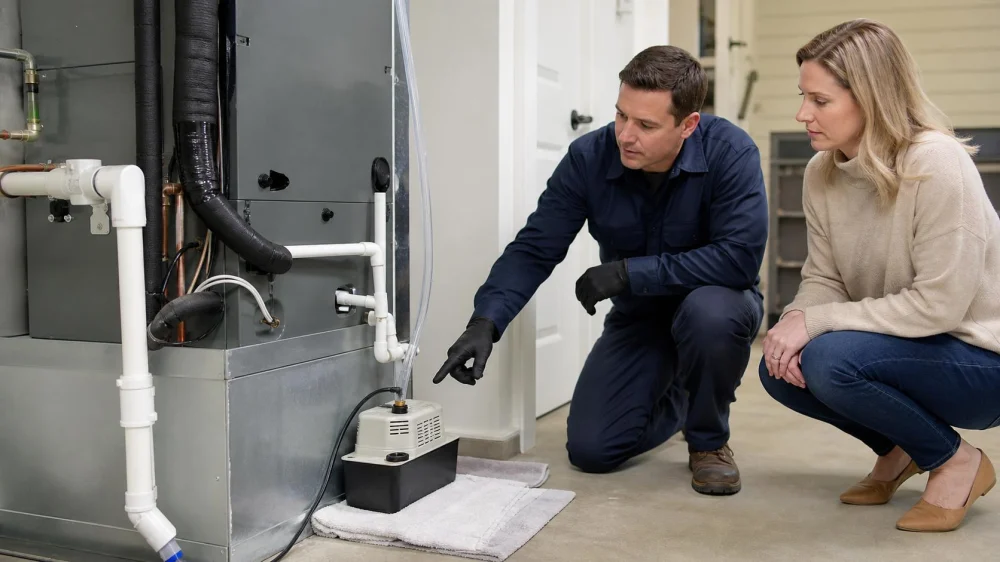
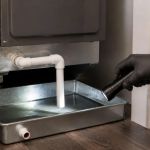
Air conditioners and high-efficiency furnaces can produce condensate. Where gravity cannot carry this water to an approved drain, a small pump collects it in a reservoir and sends it through tubing to a discharge point.
Many pumps include a float that starts the motor and a separate overflow safety switch that can stop equipment. The exact wiring and drainage arrangement vary. A system that stops cooling may therefore be responding correctly to rising water.
Air Solutions HVAC
Fort OglethorpeCatoosa CountyGeorgia
603 Butterfly Ln Dr, Fort Oglethorpe, GA 30742, USA
Failure warning signs
- Water around the pump, furnace, air handler, or floor drain.
- A full reservoir that does not empty.
- Unusual humming, grinding, or repeated clicking.
- Cooling that stops while the thermostat still requests it.
- A loose, kinked, blocked, or disconnected discharge tube.
- Musty odor, staining, or repeated dampness nearby.
Water may also come from a clogged drain, frozen coil, cracked pan, plumbing leak, humidifier, or another source. Do not assume the pump is the only problem.
First response checklist
- Turn cooling off at the thermostat.
- Keep people and pets away from standing water and equipment.
- Do not touch wet cords, receptacles, switches, or panels.
- Place a container or absorbent material only if it can be done without electrical exposure.
- Move nearby belongings from the dry side of the area.
- Photograph the water level and visible tubing from a safe distance.
- Call qualified HVAC service.
For water contacting electrical equipment, a sparking condition, smoke, or a burning odor, leave the area and call emergency services or the utility as appropriate.
Safe observations
Without opening equipment, note whether the pump reservoir is visibly full, the plug appears connected to a dry receptacle, the discharge tube is kinked, and the pump makes any sound. Record model information only when it is visible without moving the unit.
Check the equipment manual for the meaning of a shutdown or alert. Do not restart cooling merely because the water was removed; the source and safety control still need assessment.
What not to do
- Do not bypass or tape down a float switch.
- Do not run an extension cord through a wet mechanical area.
- Do not open the pump or service panel while energized.
- Do not blow into tubing that may contain contaminated water or cleaner.
- Do not mix bleach, vinegar, drain opener, or other chemicals.
- Do not repeatedly reset a tripped breaker or GFCI.
Possible causes
A technician may find sludge, algae, a blocked or frozen discharge, a stuck float, failed motor, damaged check valve, loose tubing, lost power, improper slope, or a pump that is undersized for the application. Excess condensate can also indicate an airflow or refrigeration problem.
Diagnosis should include why water accumulated, not just replacing a wet pump.
What service should include
- Isolate power and confirm electrical safety.
- Identify the water source and inspect the primary drain path.
- Test reservoir, float, motor, check valve, and safety switch.
- Inspect tubing routing, supports, termination, and leaks.
- Clean or replace components using approved methods.
- Run enough condensate or test water to verify pumping and shutoff.
- Document damage and recommend drying or remediation when needed.
Prevent another overflow
Include the condensate system in scheduled HVAC maintenance. Keep the mechanical area visible and avoid storing items against the pump. Follow manufacturer guidance for cleaning and replacement intervals. A professional may recommend an approved alarm or secondary shutoff where water damage risk is high.
Check the area periodically during cooling season, especially after maintenance or long idle periods. A dry floor and quiet pump do not replace functional testing.
Important limitations
This article is general safety information, not electrical, plumbing, or HVAC repair instruction. Pump voltage, wiring, drainage rules, condensate chemistry, and equipment interlocks vary. Qualified professionals should perform diagnosis and repairs under applicable codes.
Sources and evidence notes
- U.S. Department of Energy: air-conditioner maintenance and condensate-drain guidance.
- Equipment and pump manufacturers: model-specific installation, cleaning, testing, and safety-switch instructions.
- National Electrical Safety resources: warnings about water near energized equipment and repeated breaker resets.
- Environmental Protection Agency: moisture control and prompt drying principles that reduce mould risk.
Frequently asked questions
Why did my AC stop when the pump filled?
An overflow safety switch may have interrupted operation to prevent water damage. Do not bypass it; have the cause checked.
Can I empty the reservoir and restart?
Removing water does not fix a blockage, failed pump, or electrical problem. Keep cooling off until the system is assessed.
Should a condensate pump run continuously?
Most cycle as water rises. Continuous operation, repeated clicking, or failure to empty deserves service; follow the model manual.
Is a little water around the pump normal?
No. Condensate should remain within the approved drainage system. Even a small leak can damage materials or create microbial growth.
Conclusion
A failed condensate pump can turn normal AC moisture into building damage. Stop cooling, avoid wet electrical areas, contain water only when safe, and preserve visible clues. Professional service should test the entire drainage and safety system, correct the cause, and demonstrate reliable pumping before normal operation resumes.
 RIOJAS AC5.0 (4 reviews)
 Cool Max HVAC4.0 (220 reviews)
 PRO REFRIGERATION NT LLC4.0 (141 reviews)
 ARTC Heating & Cooling4.0 (23 reviews)
 Alan's Air Conditioning Service Inc.4.0 (1846 reviews)
 Total Systems Heating-Cooling4.0 (65 reviews)
 Water in Your AC Drain Pan: Safe Checks Before Overflow
 AC Short Cycling: Safe Checks Before You Call
 How to Fix Air Conditioner Refrigerant Leaks Quickly and Effectively
 How to Identify and Fix an Air Conditioner Refrigerant Leak
 Who Should You Trust When You Need to Fix Air Conditioner?
 Pros and Cons of Fixing Your Air Conditioner on Your Own: Is It Worth the Risk?