
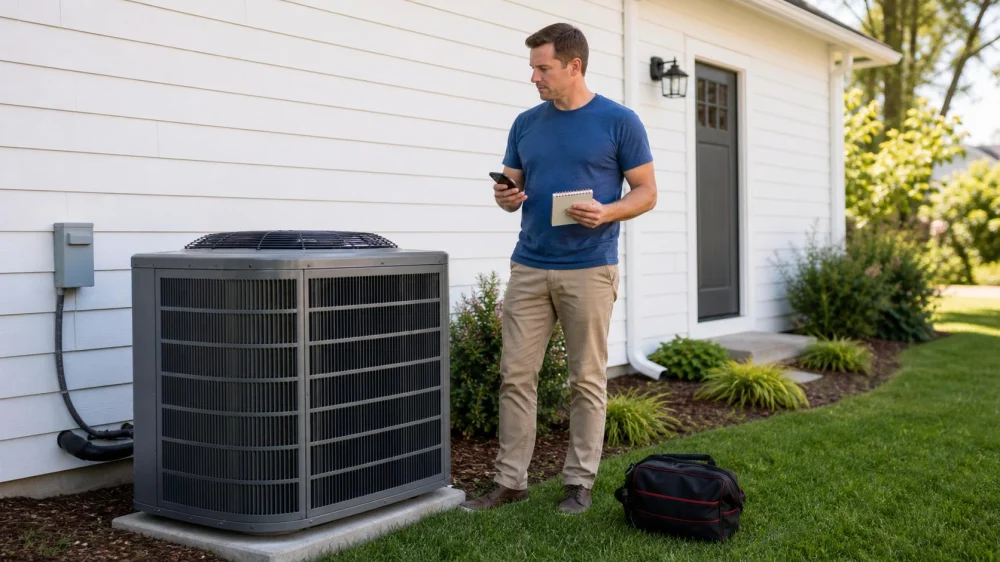
When to Call an HVAC Technician for AC Problems
On this page
Quick answer
Call an HVAC technician when your AC has electrical issues, burning smells, repeated breaker trips, frozen coils, refrigerant concerns, water leaks, loud grinding, poor cooling after basic checks, or airflow problems that do not improve with a clean filter. Homeowners should avoid opening electrical panels or handling refrigerant.

Coastal Heating & Air Conditioning
4477 SE Commerce Ave, Stuart, FL 34997, USA
Safe checks homeowners can do
Before calling, homeowners can usually check simple, low-risk items:
- Confirm the thermostat is set to cool and the temperature is reasonable.
- Replace or inspect the air filter if it is dirty.
- Make sure supply and return vents are open and not blocked.
- Check whether the outdoor unit is blocked by leaves, grass, or debris.
- Look for water around the indoor unit without touching electrical parts.
- Write down unusual sounds, smells, or when the problem started.
When to call a technician
Call a professional if the unit will not start, cycles rapidly, blows warm air after basic checks, freezes repeatedly, leaks water, trips breakers, smells burnt, makes grinding noises, or cools unevenly across the home.
Calling is also wise when the system is older, under warranty, recently repaired, or connected to comfort issues during extreme heat.

What not to DIY
DIY is best for basic observation, filter replacement, thermostat checks, and clearing safe space around the outdoor unit. It is not ideal for refrigerant work, capacitor replacement, wiring, sealed components, compressor problems, or opening panels without training.
Refrigerant handling and electrical diagnosis require proper tools, training, and compliance with applicable rules. Guessing can damage equipment or create safety risks.
What to prepare before calling
Have the system brand if visible, approximate age, thermostat setting, filter status, indoor and outdoor symptoms, photos of safe-to-view areas, and whether the breaker has tripped. Mention if anyone in the home is vulnerable to heat.
Clear access to the indoor unit, outdoor condenser, attic, basement, or closet if safe to do so.
Decision checklist
- Filter is clean but cooling is still poor.
- Outdoor unit is clear but system struggles.
- Breaker trips or electrical smell appears.
- Ice forms on refrigerant lines or coils.
- Water appears near the indoor unit.
- System makes grinding, buzzing, or harsh noises.
- Rooms cool unevenly despite open vents.
- Problem returns after a simple reset or filter change.
Important notes
This article is general HVAC guidance for homeowners in the United States. It does not replace licensed HVAC diagnosis, manufacturer instructions, warranty terms, or electrical safety requirements.
If you smell burning, see smoke, or suspect an electrical hazard, turn the system off if safe and contact qualified help. Do not touch exposed wiring or open equipment panels.
FAQ
Should I keep running an AC that is frozen?
No. Turn cooling off and use fan-only mode if appropriate, then call a technician if freezing repeats or the cause is unclear.
Can I add refrigerant myself?
No. Refrigerant work should be handled by qualified technicians with proper tools and procedures.
What if the AC works after I reset the breaker?
A one-time trip may need observation, but repeated breaker trips are a warning sign. Stop resetting repeatedly and call a professional.
How can I help the technician diagnose faster?
Share symptoms, timing, filter status, thermostat settings, photos, sounds, smells, and whether the issue affects the whole home or only some rooms.
Evidence notes
This guide is based on common HVAC safety boundaries: homeowner-level checks, electrical risks, refrigerant restrictions, airflow issues, water management, and professional diagnosis for repeated or unsafe symptoms.
Next steps
Do the safe checks first: thermostat, filter, vents, and outdoor clearance. If the problem continues or involves electrical, refrigerant, water, or repeated cooling failure, contact an HVAC technician.
 Sears Appliance Repair4.0 (73 reviews)
 Abram Heating Air & Electric3.0 (4 reviews)
 Hamilton Weiss Heating & Cooling4.0 (31 reviews)
 Fuse HVAC & Appliance Repair Austin4.0 (34 reviews)
 Pleasant Air Conditioning and Electric5.0 (19 reviews)
 American temp0.0 (0 reviews)
 How Long Should It Take to Fix Air Conditioning? | AC Fix
 How to Deal with Air Conditioner Condenser Problems and Fix Them
 How Long Should It Take to Fix My Air Conditioner? | Tips for Fast AC Repair
 Troubleshooting AC Fan Problems: What to Do When Your Fan Won’t Start
 How to Avoid Common Mistakes When Trying to Fix an Air Conditioning Leak
 How to Avoid the Most Common Air Conditioning Repair Mistakes for Homeowners