
AC Short Cycling: Record Run Times Before You Call
On this page
Quick answer
Short cycling means cooling starts and stops more often than expected without completing a normal comfort cycle. Confirm the thermostat mode and setpoint, note exact start and stop times, check the accessible filter and open vents, and avoid repeated resets. Shut the system down for urgent electrical, overheating, or severe equipment symptoms and call a qualified technician.
My Aire Heating and Cooling of McDonough
2495 McGarity Rd Suite B, McDonough, GA 30252, USA
Why short cycling needs a pattern, not a guess
Cycle length changes with outdoor heat, indoor load, thermostat location, equipment type, staging, humidity, and control settings. Rapid stops may relate to airflow, condensate protection, controls, electrical components, refrigerant conditions, overheating, equipment sizing, or another fault. Observation can narrow the service conversation, but diagnosis may require instruments and access to energized or sealed equipment.
This guide is for United States occupants documenting a central or ducted air-conditioning system that appears to cycle too frequently. It is not a repair manual and does not cover panels, capacitors, contactors, refrigerant, wiring, or bypassing safety controls. Equipment instructions and technician requirements vary.
Curtis Heating & Cooling, Inc.
CrozetAlbemarle CountyVirginia
5391 Three Notch'd Rd, Crozet, VA 22932, USA
Practical checklist
- Thermostat mode, setpoint, displayed indoor temperature, fan setting, schedule, hold, and any visible warning or blank-screen event.
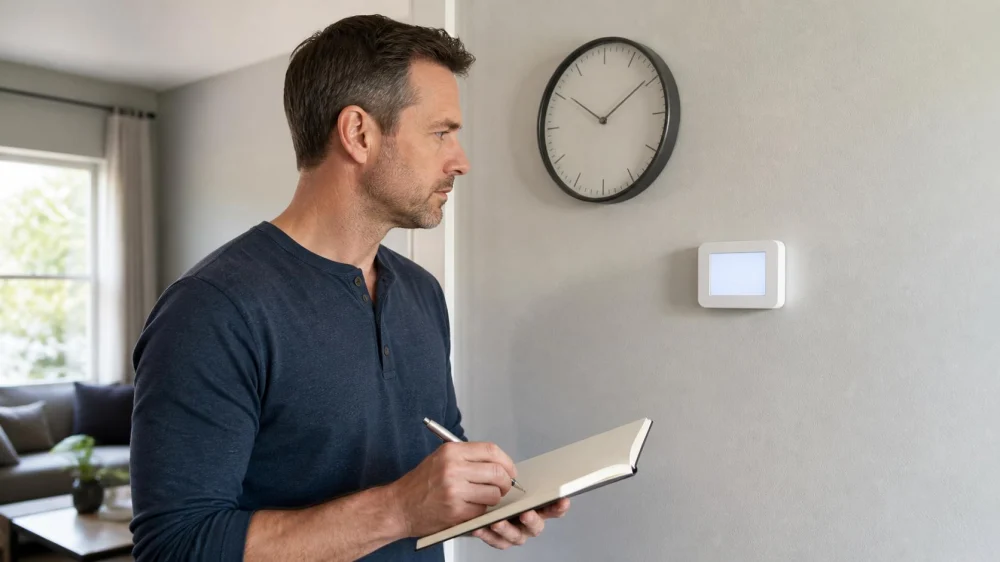
- Exact cooling start and stop times for several cycles and whether the indoor fan and outdoor unit stop together.
- Outdoor temperature, sun exposure, cooking, showers, doors, windows, number of occupants, and other changing heat or moisture loads.
- Comfort by room, indoor humidity if measured with a reliable device, airflow changes, unusual odours, sounds, or vibration.
- Accessible filter size, installation date, visible loading, airflow arrow, and whether supply and return grilles are open and unobstructed.
- Water near equipment, visible ice, breaker trips, burning smell, buzzing, hot surfaces, or other conditions that change urgency.
- System model and serial records, installation date, maintenance and repair history, recent power events, and when the pattern began.
Step-by-step plan
- Confirm the thermostat is in cooling mode with a reasonable setpoint and the fan setting you normally use. Do not create an extreme setpoint to force longer operation.
- Use a clock to record several start and stop times without opening equipment. Note whether cooling satisfies the setpoint or stops while the home remains warm.
- Check the user-accessible filter according to the system instructions and verify that ordinary supply and return grilles are not blocked by furniture or belongings.
- Look from a safe distance for water, ice, debris against the outdoor unit, or a clearly obstructed airflow path. Do not reach through guards or remove panels.
- Stop cooling if ice is visible and follow manufacturer guidance about fan operation while arranging service. Do not chip or heat ice.
- Call a qualified HVAC technician with the timing log, thermostat observations, filter details, comfort map, weather, recent changes, and equipment records.
- After service, retain the diagnosis, readings, parts, settings, invoice, and recommended monitoring. Compare later cycles only under broadly similar conditions.
A useful log includes date, outdoor conditions, thermostat mode and setpoint, displayed temperature, cooling start and stop, fan and outdoor-unit behaviour, room comfort, humidity, filter status, noises, odours, water or ice, and any action taken. Photograph codes before they disappear.
Limits and important notes
Do not remove electrical panels, touch terminals, test capacitors, add refrigerant, bypass float switches, hold contactors, or keep resetting a breaker. Cycle timing alone cannot identify a failed part or prove incorrect equipment sizing. Some variable-capacity systems intentionally change output and may not behave like a single-stage unit.
Turn the system off and seek prompt professional help for a burning smell, smoke, sparking, repeated breaker trips, loud mechanical impact, extensive ice, significant leaking, or an outdoor fan that is not operating normally. Call emergency services for fire or immediate danger. Keep people away from energized wet equipment.
Frequently asked questions
How short is too short for an AC cycle?
There is no universal minute threshold. Equipment design, load, weather, controls, and symptoms must be assessed together.
Will lowering the thermostat stop short cycling?
Usually not, and an extreme setting can obscure the pattern. Use a reasonable setpoint and record what happens.
Can a dirty filter cause frequent cycling?
Restricted airflow can contribute to operating problems, but replacing an appropriate dirty filter does not rule out other causes.
Should I reset the breaker?
Do not repeatedly reset a tripping breaker. A trip can indicate an electrical or equipment fault requiring professional assessment.
What should I tell the technician?
Provide timed cycles, thermostat settings, weather, comfort and humidity changes, filter status, noises, odours, water, ice, codes, and recent service history.
Sources and evidence
Use the thermostat and HVAC equipment manuals for user-accessible checks, current filter specifications, service records, and a qualified technician's measurements and diagnosis. Local weather and a reliable clock support the log but cannot replace electrical, airflow, control, and refrigerant testing.
Conclusion and next steps
Keep the setpoint reasonable, time several cycles, and record what the indoor fan, outdoor unit, temperature, humidity, and rooms do. Check only accessible airflow items and stop for urgent symptoms. A concise timing log helps the technician reproduce the problem and choose measurements instead of guessing from a single short visit.
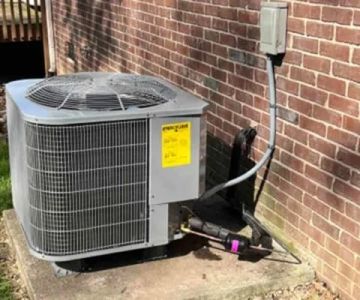
 Lippard Heating & Air5.0 (43 reviews)
 Paschall Heating & Air4.0 (91 reviews)
 Griffith Properties A/C & Heating5.0 (123 reviews)
 1 Clear Choice Heat and Air4.0 (31 reviews)
 On Time Air HVAC5.0 (186 reviews)
 Amerson Heating & Air Conditioning5.0 (2 reviews)
 How Long Should It Take to Fix an Air Conditioner? – Timely Repairs Explained
 How to Clean Your Air Conditioning System for Maximum Cooling Performance
 How to Identify and Replace a Faulty Air Conditioner Fan Motor Safely
 The Pros and Cons of DIY Air Conditioning Repairs
 How to Prevent Air Conditioner Breakdowns with Regular Maintenance
 How to Perform Basic Air Conditioner Troubleshooting on Your Own