
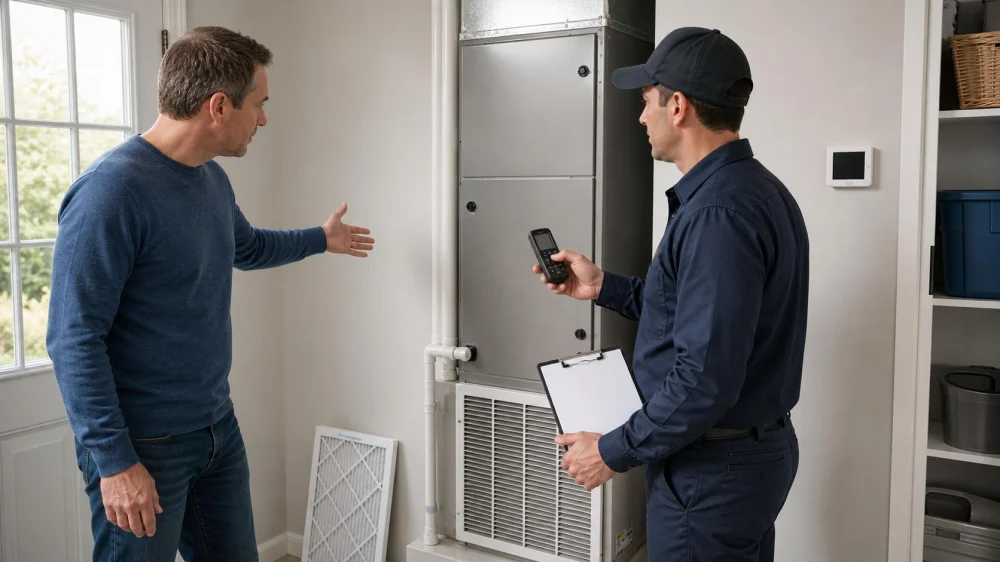
AC Odors: Musty, Burning, or Chemical—When to Stop
On this page
- Quick answer
- First response to a new AC odor
- Musty or damp odors
- Burning, hot plastic, or electrical odors
- Chemical, solvent, or sweet odors
- Sewer-like or rotten odors
- Animal, decay, or pest odors
- Map when and where the odor appears
- Safe homeowner checks
- What to tell the HVAC technician
- Frequently asked questions
- Conclusion and next steps
Quick answer
Stop the AC and get help for smoke, sparks, a strong burning or electrical odor, breathing irritation, a suspected refrigerant release, or any carbon monoxide alarm. Leave the building and call emergency services for fire, gas, or carbon monoxide danger. For mild musty or drain-like odors, note when and where they occur, check the filter and visible drain area without opening equipment, and schedule HVAC service if the smell persists or returns.
Odor alone cannot confirm a cause. Airflow can carry smells from drains, walls, attics, crawlspaces, outdoor sources, stored products, or other appliances, so avoid using your nose as a safety test.
First response to a new AC odor
- Move away from the strongest odor and assess whether anyone has symptoms.
- Look for smoke, sparking, melting material, or an active alarm without approaching equipment.
- Turn the system off at the thermostat if it is safe to remain inside.
- Leave and contact emergency services for fire, gas, or carbon monoxide concerns.
- Do not restart the system repeatedly to reproduce a strong or hazardous smell.
- Record the time, weather, operating mode, rooms affected, and how long the odor lasted.
Musty or damp odors
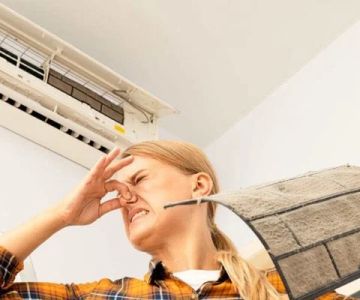
A musty smell can be associated with moisture on a coil, in a drain pan, around insulation, inside a cabinet, in ducts, or elsewhere in the building. High indoor humidity, a blocked drain, a wet filter, or water intrusion can support microbial growth, but the exact source needs inspection.
Check for visible water near the indoor unit, stained ceilings, damp carpet, or a wet filter without removing panels. Do not spray disinfectant, fragrance, bleach, or another chemical into vents or equipment. Cleaning methods must suit the material and HVAC system.

Weatherguard Air Conditioning
CumberlandAllegany CountyMaryland
11809 Iowa Dr NW, Cumberland, MD 21502, USA
Burning, hot plastic, or electrical odors
A hot or burning smell may involve overheated wiring, a motor, insulation, a control, debris near a heat source, or another electrical device in the home. Smoke, sparking, buzzing, repeated breaker trips, or melting plastic increases urgency.
Turn the HVAC system off if safe, keep away, and contact a qualified professional. For smoke or fire, evacuate and call emergency services. Do not open electrical panels, touch damaged wiring, replace a fuse, or keep resetting a breaker.
Chemical, solvent, or sweet odors
Cleaning products, paint, pesticides, stored fuel, adhesives, new furnishings, and outdoor work can enter the return air and spread through the home. Refrigerant leaks may not have a reliable odor and cannot be confirmed by smell.
If an odor causes dizziness, headache, nausea, eye or throat irritation, or breathing difficulty, move to fresh air and seek appropriate medical or emergency guidance. Stop the system and call an HVAC technician when a refrigerant or equipment problem is suspected. Do not search with a flame or attempt to tighten refrigerant fittings.
Sewer-like or rotten odors
A dry plumbing trap, drain problem, sewer-gas entry, condensate connection issue, or nearby source may create a drain-like smell that airflow distributes. The odor may seem strongest at a vent even when the vent is not the source.
Note whether the smell changes after plumbing use, rain, or long periods when a fixture is unused. Contact the appropriate HVAC or plumbing professional to trace it. Leave and obtain urgent help if there is a strong gas-like smell, illness, or an alarm; do not assume it is only a drain.
Animal, decay, or pest odors
Animals or nesting material can enter an attic, crawlspace, wall, outdoor unit area, or damaged duct. A decaying odor may travel widely through return or supply air. Do not reach into equipment or duct openings where an animal, sharp metal, contamination, or electrical parts may be present.
Turn off the system if circulation worsens the odor and contact HVAC and pest or wildlife professionals as appropriate. Repair access points only after confirming they are not trapping a live animal inside.
Map when and where the odor appears
Record whether the smell starts with the indoor fan, compressor, cooling cycle, or another appliance. Compare rooms, supply vents, return grilles, the thermostat area, and the indoor and outdoor equipment from a safe distance.
Note recent filter changes, cleaning, painting, pest treatment, water leaks, drain work, renovations, power outages, and long shutdowns. A concise timeline helps the technician separate HVAC sources from odors merely carried by the system.
Safe homeowner checks
- Confirm the thermostat mode and whether the fan is circulating continuously.
- Inspect the accessible filter for wetness, collapse, heavy dirt, or incorrect fit.
- Look around the indoor unit for visible water without removing covers.
- Check whether household chemicals, trash, or stored materials sit near a return.
- Look for an active plumbing leak, dry rarely used fixture, or recent drain issue.
- Check smoke and carbon monoxide alarms according to their instructions.
Do not enter a contaminated crawlspace or attic, open a refrigerant system, or reach into a blower or duct.
What to tell the HVAC technician
Describe the odor in plain terms without insisting on a diagnosis. Provide the start time, affected areas, system mode, cycle timing, symptoms, alarms, visible moisture, electrical events, filter information, recent work, and steps already taken.
Ask the technician to inspect relevant electrical components, motors, coil and drain system, cabinet, accessible duct connections, filter fit, and nearby sources. Request written findings, photographs where practical, repair options, and safe restart instructions.
Frequently asked questions
Is a dusty smell normal on the first AC use?
A brief mild odor may come from settled dust, but strong, persistent, smoky, or irritating smells need attention. Cooling equipment should not produce a burning smell.
Can I pour bleach into the condensate line?
Only use a maintenance method specifically approved for the system and materials. Incorrect chemicals can damage components, react, or create harmful fumes.
Does refrigerant smell sweet?
Do not rely on a claimed odor profile. Refrigerant leaks require trained detection and repair. Leave the area if symptoms or a significant release are suspected.
Can an air freshener solve an AC odor?
No. Fragrance can mask the warning and add irritants. Identify and correct the moisture, electrical, plumbing, pest, or environmental source.
Conclusion and next steps
Treat smoke, electrical odors, symptoms, alarms, and suspected chemical releases as urgent. For non-emergency smells, turn the system off when appropriate, document timing and location, and make only visible low-risk checks. Avoid sprays and panel removal. A qualified technician can trace whether the odor starts in the HVAC equipment or is being carried from elsewhere.
 Baxter Heating and Cooling5.0 (9 reviews)
 HVAC Duct Repair0.0 (0 reviews)
 Zebra Ranch HVAC4.0 (4 reviews)
 A-1 Worcester Air4.0 (30 reviews)
 Restored Air5.0 (481 reviews)
 T&T Repair Services4.0 (23 reviews)
 Avoid These Common Mistakes When Trying to Fix an AC Unit
 Affordable AC Repair Services: How to Find a Reliable and Cheap Fix
 How to Repair Air Conditioner Issues Without the Help of a Technician
 Complete Guide: Air Conditioning Replacement for Homeowners in 2025
 Best Services That Fix Air Conditioning Near You Today
 How to Maintain Your Air Conditioner’s Fan Motor