
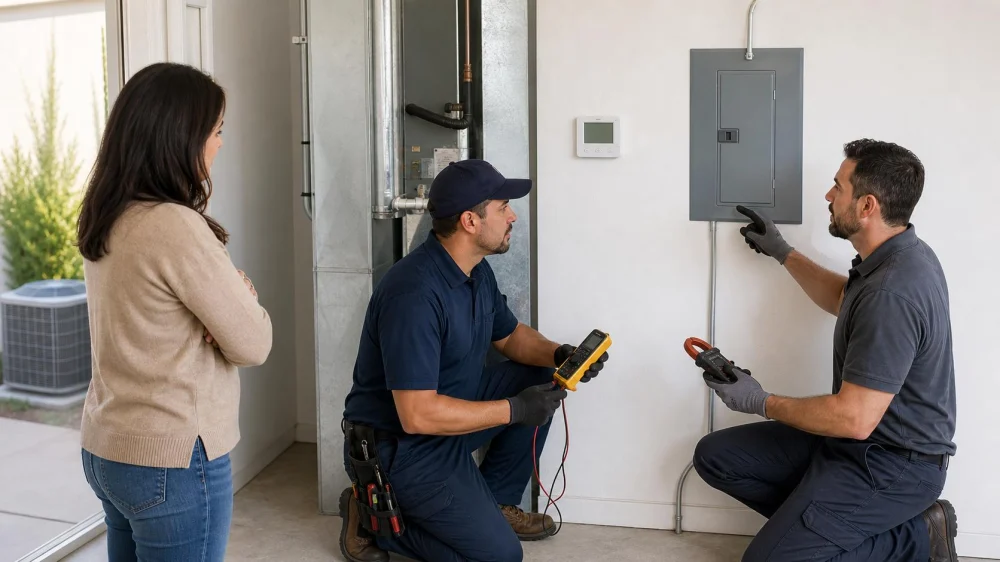
AC Breaker Keeps Tripping: Stop Resetting and Get Help
Table of contents
Quick answer
If the air conditioner’s circuit breaker trips, turn the thermostat or system off and do not keep resetting the breaker. Repeated trips can indicate overload, a motor or compressor problem, damaged wiring, moisture, a failed component, or a breaker or panel issue. Keep away from heat, buzzing, burning odor, discoloration, water, or exposed electrical parts. Call a qualified HVAC technician and, when the circuit or panel is involved, a licensed electrician.
What the breaker is doing
A circuit breaker is a protective device that opens a circuit when current exceeds its designed level or another protective condition occurs. The trip interrupts power; it is not a repair. Bypassing or repeatedly re-energising the system can worsen damage or expose people to shock, arc, and fire hazards.
OSHA rules for workplaces prohibit repetitive manual reclosing after protective-device operation until equipment and the circuit are determined safe. While household rules differ, the safety principle is useful: a second trip is evidence to stop and investigate, not an invitation to keep trying.
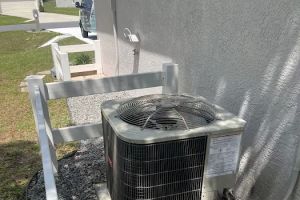
P. H. I. Air Conditioning
Beverly HillsCitrus CountyFlorida
6 N Tyler St, Beverly Hills, FL 34465, USA
First safe response
- Stop demand. Set the thermostat to off without opening equipment.
- Stay clear of danger. Do not approach a wet, hot, buzzing, smoking, sparking, or damaged panel or unit.
- Check for emergency signs. Leave and call emergency services for fire, smoke, arcing, gas odor, or immediate danger.
- Do not reset repeatedly. If a breaker already tripped again, leave it off.
- Protect vulnerable occupants. Use a safe cool location during extreme heat, especially for people at medical risk.
- Call qualified help. Describe the trip pattern and any sensory warning signs.
Do not remove the electrical panel cover or air-conditioning service panels. “Off” at a thermostat does not prove internal parts are de-energised.
What to observe
- Which breaker or protective device appears to have operated
- Whether it happened at startup, after running, or during severe weather
- Thermostat mode and recent setting change
- Unusual noise, vibration, smell, heat, frost, or water
- Whether the indoor fan, outdoor unit, or both stopped
- Recent power outage, surge, flood, service, or construction
- Filter size and replacement date
- Other equipment that lost power on the same circuit
- Approximate system age, model, and previous repairs
Take photos only from a safe distance. Do not touch a breaker or panel with wet hands or while standing in water.
Possible categories of causes
Airflow and heat load: A severely restricted filter, blocked coil, or other airflow problem can stress equipment, but replacing a filter does not make repeated resetting safe.
Motor or compressor fault: A failing motor, locked compressor, damaged capacitor, or mechanical problem can draw abnormal current and requires testing.
Wiring or connection issue: Loose, damaged, undersized, overheated, or wet electrical components can trip protection and present fire or shock hazards.
Breaker or panel problem: The protective device, connection, panel, circuit design, or labeling may be wrong or deteriorated. A licensed electrician should assess electrical distribution issues.
Environmental condition: Storm damage, flooding, insects, debris, ice, or a contaminated outdoor unit can contribute. Do not open or wash electrical equipment to investigate.
Who to call
An HVAC technician can evaluate refrigerant-system performance, airflow, motors, compressor, controls, capacitors, contactors, and equipment wiring. A licensed electrician can assess the branch circuit, disconnect, breaker, conductor size, panel, connections, grounding, and supply. Some incidents need both trades.
Ask the service company whether its technician is licensed or certified as required locally and authorised for the specific electrical scope. Give full symptoms when booking so it sends the right professional.
Prepare for service
- Keep the breaker off if instructed or if it tripped again.
- Clear a dry safe path to the thermostat, indoor unit, outdoor unit, disconnect, and panel.
- Keep children and pets away.
- Gather model numbers, manuals, warranty, and service records.
- Write the exact trip timeline and system behaviour.
- Do not clean, reset, or move evidence before the technician sees it.
- Ask for findings, measurements, options, and final safety checks in writing.
What not to do
- Do not repeatedly reset the breaker.
- Do not hold a breaker in the on position.
- Do not install a larger breaker or fuse.
- Do not bypass a disconnect, fuse, float switch, pressure switch, or other control.
- Do not replace capacitors or open panels without qualifications.
- Do not spray water into the outdoor unit while troubleshooting.
- Do not run an extension cord to power central AC equipment.
- Do not accept “it works now” without identifying why protection operated.
Limits and emergencies
This article cannot diagnose a trip or authorise resetting. Electrical and HVAC systems store energy and may remain hazardous after a shutdown. Call emergency services for smoke, fire, arcing, explosion sounds, severe burning odor, or immediate shock risk. Contact the utility when its equipment or service conductors may be involved. Seek prompt cooling and medical advice for heat illness symptoms; do not remain in dangerous indoor heat waiting for repair.
Frequently asked questions
Can a dirty filter trip the AC breaker?
Restricted airflow can stress some systems, but repeated trips may have other causes. Replace only the correct filter safely and still obtain service.
Is one reset okay?
Manufacturer and local guidance control. If it trips again or danger signs exist, stop. Do not repeatedly re-energise a fault.
Should I call HVAC or an electrician?
Start with the company best matched to the symptoms, explain that the breaker trips, and ask whether both trades are needed.
Can I use a bigger breaker?
No. Overcurrent protection must match the circuit and equipment. Upsizing without engineered and permitted changes can remove safety protection.
Official sources
OSHA’s interpretation on resetting circuits after protective-device operation explains why repetitive manual reclosing is prohibited in workplaces. CPSC’s Guide to Home Wiring Hazards describes breakers as overcurrent and fire-protection devices. Also follow the equipment manual, local electrical code, and qualified service guidance.
Next steps
Leave the system off, record when the breaker tripped and what you noticed, then call qualified HVAC and electrical help. Arrange safe cooling for occupants while the cause is tested and repaired.
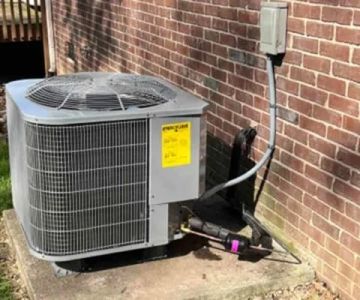
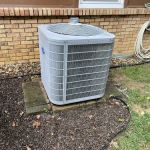 Perfection Heating, Air Conditioning & Refrigeration4.0 (1071 reviews)
 Cross Comfort Solutions5.0 (31 reviews)
 Midwest Mechanical Services Inc4.0 (8 reviews)
 Sears Heating and Air Conditioning0.0 (0 reviews)
 Montani Mechanical Group4.0 (464 reviews)
 Hull Services Company HVAC5.0 (1 reviews)
 Avoid These Costly Mistakes When Trying to Fix Central Air Conditioning Unit
 The Ultimate Checklist to Fix Central Air Conditioning Unit Successfully
 How to Solve Air Conditioner Cooling Issues Without Calling a Professional
 Affordable Companies That Fix Air Conditioning Near You – Find Trusted Services
 Troubleshooting AC Fan Problems: What to Do When Your Fan Won’t Start
 10 Signs It's Time to Ask: Who Can Fix My AC?