
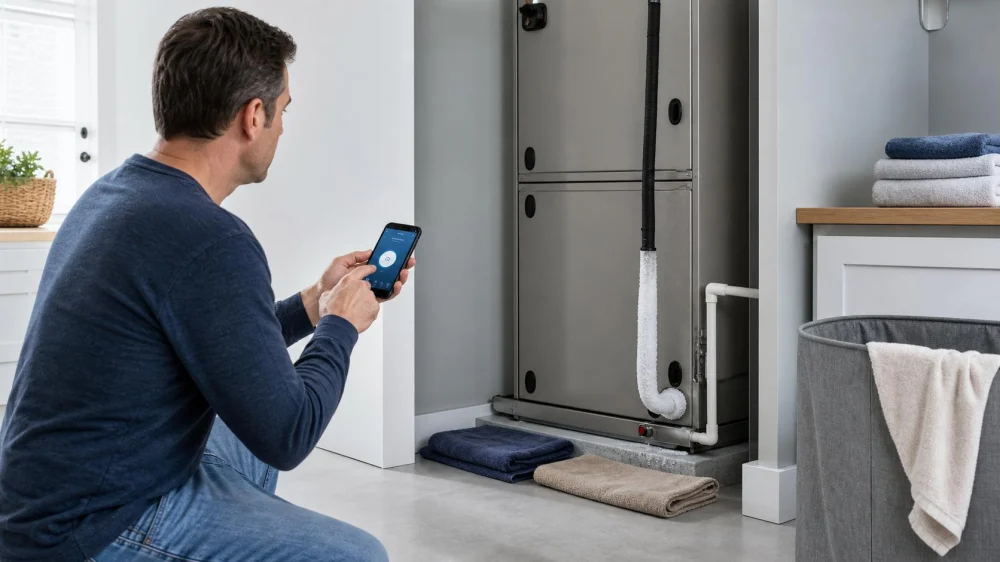
Frozen AC Coil: Stop Cooling and Let the Ice Melt Safely
Quick answer: Switch the thermostat from cooling to off when you see ice on an indoor coil cabinet or refrigerant line. Do not chip, scrape, pour hot water, or use a hair dryer. Check the filter and open vents without opening equipment panels, protect the condensate area, and call an HVAC technician. If the blower works normally and no electrical or drainage hazard exists, the technician or manufacturer may advise running fan-only while the cooling stays off.
Ice is a symptom, not the repair. Restricted airflow, a dirty coil, a blower problem, low refrigerant from a leak, a control fault, or operation under unsuitable conditions can all contribute. Restarting without finding the cause can repeat the freeze and damage equipment.
1. Confirm Visible Signs Without Opening Panels
Common signs include frost on the larger insulated copper line near the indoor unit, ice on the accessible exterior of the coil cabinet, weak airflow, warm supply air, long run time, and unusual water around the air handler or furnace. Ice may also extend outdoors along refrigerant tubing in a severe freeze.
Do not remove an access panel to look for ice. HVAC cabinets can contain high voltage, moving parts, sharp metal, and refrigerant components. Photograph only what is visible from a safe floor-level position.
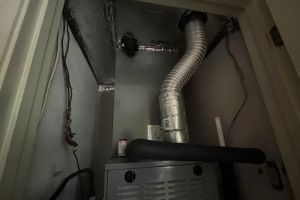
2. Stop the Cooling Cycle
Set the thermostat mode to off so the compressor does not continue trying to cool a blocked coil. Do not repeatedly lower the setpoint or cycle the system to test it. Continued cooling can build more ice and place additional strain on the compressor.
If the system has a separate disconnect or breaker, leave it alone unless the equipment manual, technician, or an electrical emergency plan directs a shutoff you can perform safely. A tripped breaker, burning smell, or electrical fault is not a routine thermostat problem.

Doshier Appliance A/C & Heating
Mineral WellsPalo Pinto CountyTexas
4108 Mh 379, Mineral Wells, TX 76067, USA
3. Let Ice Thaw Naturally
Allow time for complete melting. Depending on ice amount, airflow, and indoor conditions, this can take hours. Keep cooling off. Some manufacturer guidance suggests setting the blower fan to on to move warmer indoor air over the coil, but only when the fan is operating normally and meltwater can drain safely.
Do not use a hair dryer, space heater, heat gun, open flame, hot water, screwdriver, knife, or hammer. Rapid heat and force can damage delicate coil fins, tubing, insulation, wiring, drain pans, and cabinets.
4. Prepare for Meltwater
Ice may have formed beyond the normal drain-pan capacity. Place towels or a shallow tray on a dry, safe floor without blocking equipment combustion air, access, or wiring. Check the condensate pump and drain area visually for overflow.
Keep water away from receptacles, cords, control boards, and the furnace. If water approaches electrical equipment, a ceiling below begins leaking, or the drain pan overflows, shut the system down as directed and call for urgent service. Do not open or vacuum an unknown drain line while electrical hazards are present.
5. Check Simple Airflow Conditions
With cooling off, verify that the return grille and supply registers are open and not covered by furniture, rugs, boxes, or closed dampers. Inspect the air filter using the normal homeowner access. Confirm its size, orientation, fit, and condition.
Replace a visibly dirty disposable filter with the exact specified type if the manufacturer allows homeowner replacement. Do not run the system without a filter, use an overly restrictive filter not approved for the equipment, or assume a clean filter rules out other airflow problems.
6. Avoid Refrigerant and Electrical DIY
Low refrigerant is not consumed during normal operation; it can indicate a leak or another technical issue. Do not add refrigerant, use a “stop leak” product, bend tubing, or connect gauges. U.S. refrigerant handling and equipment service require appropriate tools, training, and compliance.
Do not touch capacitors, contactors, blower wiring, control boards, motors, or internal switches. Even with the thermostat off, equipment can contain dangerous electricity. A qualified HVAC technician should diagnose refrigerant, blower, control, and coil problems.
7. Build a Useful Symptom Record
Note when cooling began, thermostat mode and setpoint, indoor and outdoor conditions, filter date, airflow changes, rooms affected, ice location, unusual sounds, water, and whether the blower runs. Record any recent maintenance, outage, thermostat change, closed vents, renovation dust, or recurring freeze.
Take safe photos before, during, and after thawing. Do not delay turning cooling off for a better photo. Share equipment model and serial information from an accessible label without opening panels.
8. Recognize Urgent Shutdown Conditions
Stop the entire system and seek urgent professional help for a burning or electrical odor, smoke, sparking, repeated breaker trip, loud mechanical noise, blower failure, heavy water near electrical parts, ceiling leakage, or a damaged refrigerant line. Leave the area and call emergency services for fire, smoke, or another immediate danger.
Keep children and pets away from water and equipment. Do not stand in water to reach a switch or panel.
9. Restart Only With a Clear Plan
Do not restart cooling while any ice remains. If the only clear issue was a severely clogged filter and manufacturer or technician instructions allow a test, confirm the drain area is dry, airflow is restored, and all access covers are in place. Monitor closely.
If ice returns, airflow stays weak, water continues, or cooling remains poor, turn cooling off and schedule service. Repeated thaw-and-restart cycles do not repair a leak, dirty coil, failed blower, or control problem.
10. Prevent Repeat Freezing
Use the correct filter and replacement interval, keep returns and supplies clear, and schedule maintenance appropriate to the system. A technician can measure airflow, temperature change, static pressure, refrigerant performance, blower operation, coil condition, controls, and condensate drainage.
Ask for the diagnosed cause and readings, not only “added refrigerant” or “cleaned unit.” If refrigerant was low, ask how a leak was evaluated and what repair is recommended. Keep service records to identify recurrence.
Safe sequence: cooling off; no panel removal; natural thaw; fan-only only when safe and advised; protect the drain area; inspect filter and open registers; avoid heat, tools, electricity, and refrigerant; document symptoms; call a technician; stop again if freezing returns.
Evidence notes: Carrier’s current frozen-coil guide advises turning cooling off, allowing natural thawing, avoiding heat sources, checking airflow, and using professional help for refrigerant or mechanical faults. A U.S. Department of Energy diagnostics guide explains that evaporator fouling can reduce airflow, freeze the coil, and threaten the compressor.
This article is general information. Follow the equipment manual and a qualified HVAC professional’s instructions for the specific system.
 Gent Heating And Cooling4.0 (128 reviews)
 All Seasons Mechanical Heating & Air Conditioning5.0 (2 reviews)
 Ac Lady Inc5.0 (193 reviews)
 Professional A/C and Heating, Inc.4.0 (77 reviews)
 Irwin HVAC Services LLC4.0 (91 reviews)
 Cool 1 Air Conditoning and Heating LLC4.0 (6 reviews)
 Who Should You Trust When You Need to Air Conditioning Replace? Tips and Advice
 Can You Who Can Fix My Air Conditioner Without Replacing the Entire System?
 How to Fix an Air Conditioner That’s Blowing Hot Air Instead of Cool Air | Ac Fix
 Pros and Cons of Trying to Fix AC Unit on Your Own
 Is Your Air Conditioner Not Cooling Even After You’ve Cleaned It? Here’s What to Do
 Troubleshooting Tips for an Air Conditioner That’s Not Cooling Your Home