
AC Outdoor Unit Clearance: A Safe Landscaping Guide
Table of contents
Quick answer
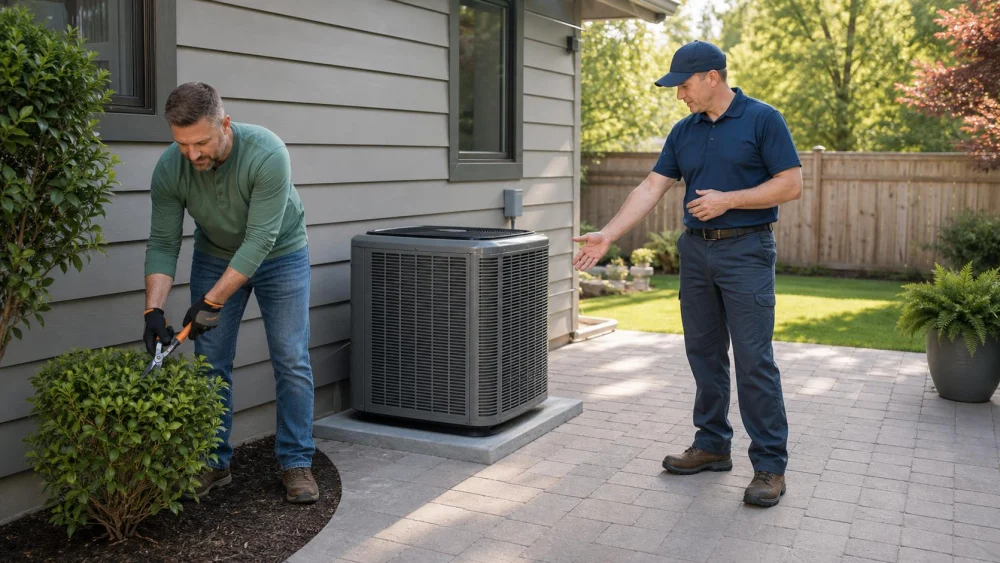
An outdoor AC condenser needs open airflow around its coil and above the fan discharge. Keep loose leaves, grass clippings, vines, and stored items away, but use the equipment manual—not a universal number—for required clearances. Turn the system off before nearby yard work, stay outside the cabinet, protect wiring and refrigerant lines, and call an HVAC professional for bent panels, damaged lines, electrical concerns, or persistent poor cooling.

Why clearance matters
The outdoor unit rejects heat collected indoors. Air must enter through the side coil and leave through the fan area without being trapped and recirculated. Dense plants, walls, low covers, or debris can restrict that path and make service access difficult. Required distances vary by model, airflow design, nearby walls, multiple units, and local installation rules, so the manufacturer’s current instructions govern the layout.
Safe ground-level check
- Set the thermostat to off before trimming or moving loose material nearby.
- Look for leaves, seed fluff, grass, weeds, toys, bags, or stored items around the unit.
- Check whether shrubs are growing into the coil guard or over the fan discharge.
- Confirm the service side and disconnect area remain accessible to a technician.
- Observe the pad for obvious tilt, washout, or standing water without pushing the unit.
- Photograph damaged conduit, insulation, lines, panels, or guards; do not handle them.
Plants, mulch, and debris
Trim vegetation from a stable position and direct clippings away from the cabinet. Hand-pick loose debris only when it is outside the unit and can be reached without touching the coil, fan, wiring, or line set. Do not spray herbicide, fertilizer, or harsh cleaner onto the equipment. Keep mulch and soil from building up against the pad because they can hold moisture, hide pests, or alter drainage.
Fences, screens, and covers
A decorative screen can reduce airflow or block service even when it looks open. Before installing one, check the unit manual and ask the installer about side intake, top discharge, access panels, and recirculation. Never place a solid shelf or low roof directly over a top-discharge unit. Use only a manufacturer-approved seasonal cover when recommended, and remove it before operation. Running a covered system can damage equipment.
When to stop and call
Do not continue yard work if you see exposed conductors, a damaged disconnect, crushed conduit, an oily line connection, a sharply bent refrigerant tube, fan contact, smoke, sparking, or a burning odor. Turn the system off from the thermostat and keep away. Contact qualified service for cabinet cleaning, coil damage, abnormal sound, repeated shutdowns, poor cooling after clearance is restored, a significantly tilted pad, or any need to move the unit.
Maintenance checklist
Record the model number from a safely visible label, photograph all four sides, locate the installation manual, note vegetation and structures, preserve the service side, check overhead space, remove reachable loose debris, redirect sprinklers away, and document pad drainage. Recheck after storms, seasonal plant growth, landscaping work, or construction. Keep dates and photos with HVAC service records.
Limits and safety notes
This general U.S. guidance does not provide a clearance dimension for every unit or authorize cabinet access. Electricity may remain present even when the thermostat is off, and refrigerant circuits are pressurized. Do not open panels, reach through guards, wash internal components, disconnect power hardware, cut near wiring or lines, or move the condenser. Follow the exact equipment manual, local code, utility guidance, and qualified technician instructions.
Evidence notes
The equipment installation and service literature is the primary source for side, top, and service clearances. A useful review records unit model, airflow configuration, surrounding walls or plants, overhead obstruction, drainage, and access. Photos taken before and after safe landscaping show whether an obstruction was corrected, but performance problems still require measurements by a trained technician.
Frequently asked questions
How many inches of clearance does every condenser need?
There is no single distance for every model and layout. Use the manufacturer’s installation instructions.
Can shrubs hide the outdoor unit?
They can be part of landscaping only if required airflow, growth allowance, and technician access remain open.
Can I hose off the coil?
Do not wash internal parts without the manufacturer’s procedure and appropriate electrical isolation. Professional cleaning may be safer.
Should the unit be covered in winter?
Follow the manufacturer’s guidance. A full cover can trap moisture or be forgotten before startup.
Can I level a tilted condenser myself?
Do not push, lift, or reposition it because wiring and refrigerant lines can be damaged. Have the pad and unit assessed.
Next steps
Find the model-specific installation manual, photograph the current surroundings, switch the thermostat off for nearby yard work, and remove only loose material that is safely outside the cabinet. Preserve the specified airflow and service area. Book HVAC service if the unit is damaged, tilted, electrically unsafe, obstructed by permanent construction, or still performs poorly after the surroundings are cleared.

 Highway 64 Truck and Trailer Repair4.0 (342 reviews)
 Hollowood Heating AC Plumbing4.0 (28 reviews)
 Carter’s Heating and Air Conditioning0.0 (0 reviews)
 Sun Air Conditioning & Heating4.0 (170 reviews)
 North Georgia HVAC4.0 (15 reviews)
 Frost Air Heating & Cooling5.0 (6 reviews)
 How Long Should It Take to Fix Air Conditioning? | AC Fix
 How to Fix an Air Conditioner with a Faulty Expansion Valve
 Everything You Need to Know Before You Fix Your Air Conditioner
 The Ultimate Checklist to AC Fix Successfully: Expert Tips and Tricks
 What to Prepare Before an AC Service Visit
 How to Identify a Faulty Air Conditioner Compressor and Replace It