
High Indoor Humidity With AC On: Measure Before Adjusting
On this page
Quick answer
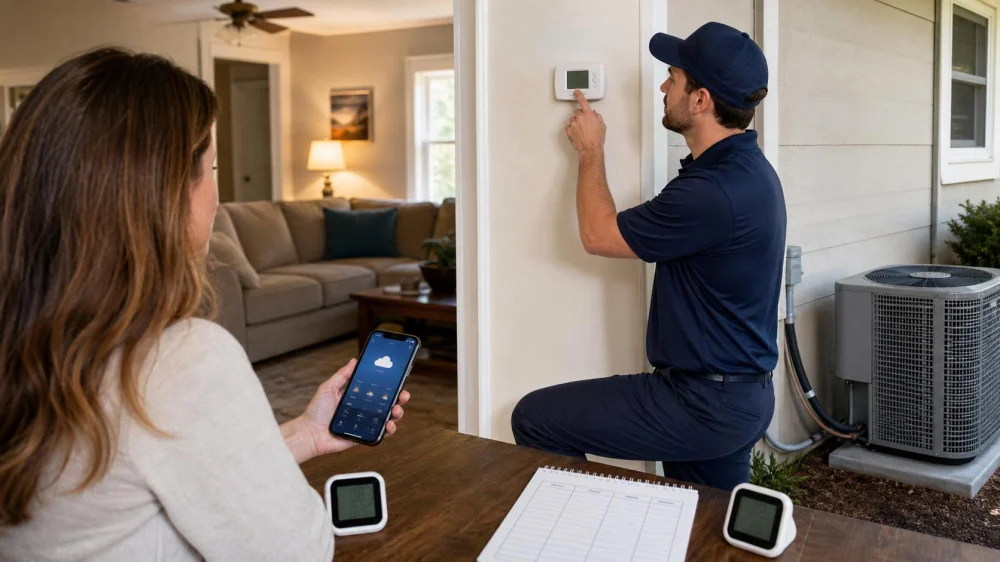
If the home feels clammy while the AC runs, measure relative humidity with a reliable gauge in several rooms and record indoor temperature, outdoor conditions, thermostat settings, run times, and moisture events. Check obvious sources such as open windows, bathroom and kitchen exhaust, dryer venting, plumbing or roof leaks, and a full condensate pan without opening HVAC equipment. Persistent high humidity needs building and HVAC diagnosis, not simply a lower thermostat setting.

Measure a pattern
- Place the gauge away from supply air, windows, kitchens, bathrooms, and direct sun.
- Allow it to stabilise and record time, room, temperature, and relative humidity.
- Repeat morning, afternoon, and night across dry and damp weather.
- Note AC start and stop times, fan setting, setpoint, and whether rooms reach temperature quickly.
- Compare rooms, floors, basement, and return-air area.
- Record showers, cooking, laundry, cleaning, many occupants, and open doors.
One inexpensive sensor may be inaccurate. Compare two devices or ask the technician to verify readings. EPA generally recommends keeping indoor humidity between 30 and 50 percent, but comfort and condensation risk also depend on climate and surface temperature.
Safe homeowner checks
- Set the thermostat fan to the manufacturer-recommended mode; continuous fan can re-evaporate moisture in some systems.
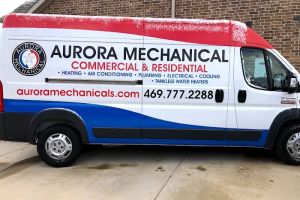
- Replace or clean the correct filter according to instructions.
- Keep supply and return grilles open and unobstructed.
- Run bathroom and kitchen exhaust to outdoors during moisture production.
- Confirm the clothes dryer exhausts outdoors and its accessible lint screen is clean.
- Look for visible water around plumbing, windows, roof areas, foundation, and condensate drain or pan.
- Keep windows and exterior doors closed when outdoor air is humid and the AC is operating.
Do not add bleach to a drain, open the air handler, adjust refrigerant, change blower wiring, or alter controls without qualified instruction.
What HVAC service evaluates
The technician may assess run time, equipment capacity, airflow, fan operation, coil temperature and cleanliness, condensate drainage, refrigerant performance, controls, duct leakage, outdoor-air ventilation, and latent moisture load. Short run times from oversized equipment can reduce dehumidification; DOE notes oversizing can increase summer indoor humidity.
Ask for actual measurements and the load calculation used before replacing or resizing equipment. Supplemental dehumidification may help some homes, but it adds energy use, drainage, maintenance, and control requirements and should not mask leaks or ventilation faults.
Protect the home
Dry wet materials promptly and repair the source. Move furniture from damp walls, use exhaust and dehumidification safely, and keep condensate draining to an approved location. If visible mold covers a large area, water involved sewage, materials remain wet, or occupants have health concerns, use appropriate remediation and medical guidance.
Humidity checklist
- Humidity and temperature mapped by room and time
- Outdoor weather and moisture events recorded
- Thermostat mode, fan setting, and run time noted
- Filter, grilles, exhaust fans, and dryer checked
- Leaks and condensate areas inspected visibly
- Sensor accuracy compared
- HVAC measurements and load sizing requested
- Wet materials dried and source repaired
- Follow-up readings scheduled
Limitations
Relative humidity changes with temperature, weather, occupancy, and sensor location. A target range is not a remote diagnosis. Moisture can come from the envelope, ground, plumbing, ventilation, or HVAC. This guide does not prescribe refrigerant, airflow, electrical, mold, or medical work.
FAQ
Should I lower the thermostat?
It may increase run time but can overcool the home and fail to solve the source. Measure and diagnose first.
Does a bigger AC remove more humidity?
Not necessarily. Oversized equipment may cool quickly and stop before removing enough moisture.
Should the fan run continuously?
Follow system-specific guidance; continuous fan can worsen humidity in some configurations.
Can a dehumidifier solve it?
It can control moisture in a suitable setup but should not replace leak, drainage, ventilation, or sizing corrections.
Is window condensation proof the AC failed?
No. It is a moisture clue affected by surface temperature, outdoor conditions, and indoor humidity.
Evidence notes
EPA recommends monitoring indoor humidity and generally keeping it between 30 and 50 percent, while controlling moisture sources and keeping areas dry. DOE research notes oversized AC and heat-pump equipment can increase summer humidity by shortening cycles. See EPA indoor air guidance and DOE HVAC sizing research.
Conclusion
Turn a clammy feeling into a time-and-room humidity map. Correct visible moisture sources and basic airflow issues, then ask HVAC service to measure capacity, run time, airflow, drainage, and controls before changing equipment.

 Sears Appliance Repair4.0 (20 reviews)
 DJS Heating and Air Service4.0 (20 reviews)
 Stokley's Services Inc4.0 (42 reviews)
 Keith HVAC4.0 (10 reviews)
 R&R Environmental Mechanical AC & Heating4.0 (47 reviews)
 Premo Air4.0 (463 reviews)
 Avoid These Common Mistakes When Trying to Fix Air Conditioning
 How to Detect and Fix Water Leaks from Your Air Conditioning Unit
 How to Solve Electrical Issues in Your Air Conditioner Unit | Ac Fix
 How to Get Your AC Fixed Like a Pro: Expert Tips and Advice
 Can You Fix My AC Without Replacing the Entire System? Here’s What You Need to Know
 The Ultimate Checklist to AC Fix Successfully - Expert Guide for Troubleshooting