
AC Outdoor Unit Clearance: Trim Plants Without Damage
On this page
Quick answer
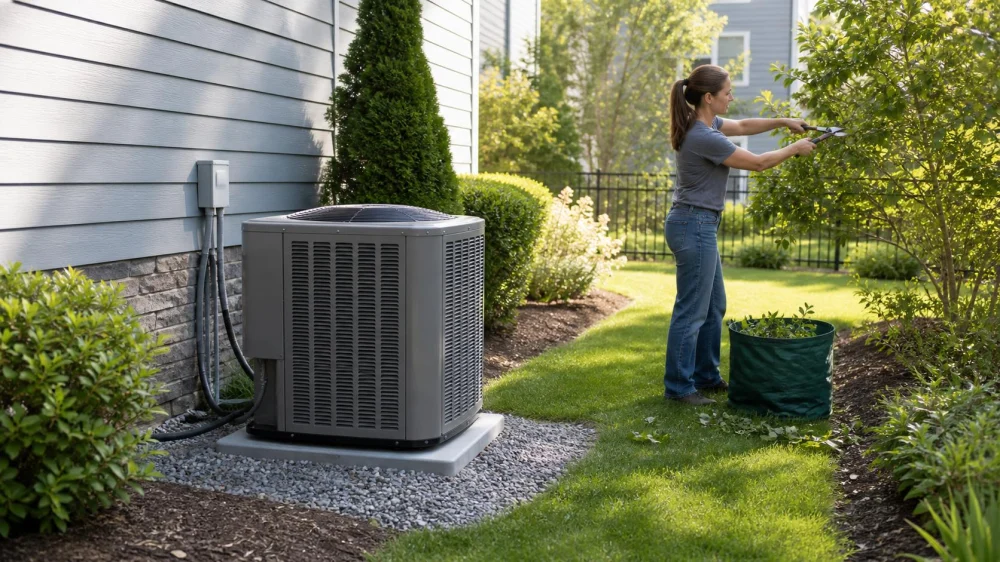
Keep shrubs, weeds, leaves, mulch, fencing, covers, and stored items away from the outdoor AC unit according to the manufacturer’s required side and overhead clearances. Shut the system off before nearby yard work, use hand tools carefully, and direct clippings away. Do not open panels, bend fins, spray electrical parts, relocate the unit, or guess at clearance when the installation manual is available.
Maintain a safe service path so a technician can reach electrical disconnects and panels without squeezing through plants.

Professional Heating & Air
MandevilleSt. Tammany ParishLouisiana
594 Asbury Dr e3, Mandeville, LA 70471, USA
Why clearance matters
The outdoor unit moves a large volume of air through its coil and discharges heat. Crowded plants or solid barriers can restrict intake, encourage recirculation of hot discharge air, collect debris, interfere with service, and hide damage or pests.
More space is not a substitute for correct installation. The unit’s model instructions, nearby walls, multiple units, prevailing wind, snow, roof runoff, and landscaping all affect acceptable placement.
Home Services at The Home Depot
Palm CoastFlagler CountyFlorida
10 Garden St N, Palm Coast, FL 32137, USA
Before yard work
- Find the model number from an exterior label without removing panels.
- Use the manufacturer’s current installation or owner guidance for clearance.
- Set the thermostat so cooling will not start during work.
- Use the normal shutoff method described in the manual when needed.
- Identify the disconnect and keep access open, but do not open or service it.
- Wear eye and hand protection appropriate for trimming.
- Check for insects, animals, sharp metal, damaged wiring, and unstable ground.
Do not work near the unit during lightning, flooding, or when ground conditions make power equipment unsafe.
What to clear
- Loose leaves, grass clippings, seed fluff, and litter around the base
- Weeds and branches growing into the coil guard
- Shrubs that block required side or overhead space
- Mulch or soil piled against the pad or cabinet
- Garden tools, hoses, toys, furniture, and storage
- Objects obstructing the technician’s route and working area
Cut growth away in small sections and lift it outward rather than pulling branches through the guard. Bag debris so the next breeze does not return it to the coil.
What to avoid
Do not use a string trimmer against refrigerant lines, low-voltage wires, insulation, the cabinet, or the pad. Keep lawn-mower discharge and herbicide, fertilizer, paint, and pressure-washer spray away. Do not force a hose through the guard or apply a household coil chemical.
A decorative screen, solid fence, roof, or tight cover can restrict airflow even if no leaves touch the unit. Ask an HVAC professional before installing one. Never cover an operating cooling unit.
Ground-level condition check
From outside the guard, look for crushed fins, loose panels, corrosion, oil-like residue, damaged line insulation, disturbed wiring, a sinking or tilted pad, water flowing toward the unit, and nests. Photograph concerns without touching them.
After restoring normal settings, listen from a safe distance. Shut the system down and seek service for grinding, electrical buzzing, smoke, burning odor, repeated breaker trips, exposed wiring, or a fan that does not operate as expected.
When to call HVAC service
Call a qualified technician when required clearance cannot be created without moving the unit, piping, wiring, disconnect, fence, or structure; when the coil needs internal cleaning; or when damage, refrigerant concerns, pests, drainage, or pad movement is visible.
Ask the technician to document manufacturer clearances, coil condition, airflow obstructions, service access, and any landscaping changes recommended.
Frequently asked questions
How far should plants be from the unit?
Requirements vary by model and side. Use the manufacturer’s installation instructions rather than a universal number.
Can I shade the outdoor unit?
Do not add a close roof or screen that restricts airflow or service. Ask an HVAC professional about the full installation.
Should I hose off the coil?
Follow the manufacturer’s homeowner maintenance instructions. Internal or chemical cleaning belongs with service.
Can mulch surround the pad?
Keep material from piling against the pad or cabinet and preserve drainage and clearance.
What if vines entered the guard?
Do not pull them through moving or delicate parts. Shut down normally and call service if safe external trimming cannot remove them.
Sources and evidence notes
This guide reflects condenser airflow, service-access, landscaping, and electrical-safety principles. Exact clearances and approved cleaning steps are model-specific and may also be affected by mechanical and electrical codes.
Follow the unit manufacturer’s documents and use a qualified HVAC professional for internal, electrical, refrigerant, or relocation work.
Conclusion and next steps
Find the model’s clearance requirements, stop operation before trimming, and remove plants and stored items in controlled sections. Protect the coil, lines, wires, and pad from tools and chemicals. Once the route and airflow space are clear, photograph any damage and leave internal cleaning or equipment changes to an HVAC technician.

 North Point Air Conditioning & Heating5.0 (69 reviews)
 Jay's Heating and Cooling4.0 (20 reviews)
 SERVPRO of Durant5.0 (3 reviews)
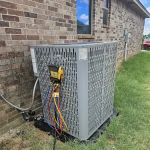 Granado Ac5.0 (1 reviews)
 Elizabethtown Winair Co.4.0 (18 reviews)
 Palmetto Systems Inc5.0 (2 reviews)
 Top Ways to Fix Your AC Quickly and Affordably in Your Area
 The Ultimate Checklist for Fixing Air Conditioning Successfully
 How to Repair a Broken Thermostat in Your Air Conditioning System
 Can You Fix Air Conditioning Without Replacing the Entire System?
 The Ultimate Checklist to Fix Wall Air Conditioner Successfully
 How to Handle an Immediate AC Repair Emergency: Fast Solutions for Your Home