
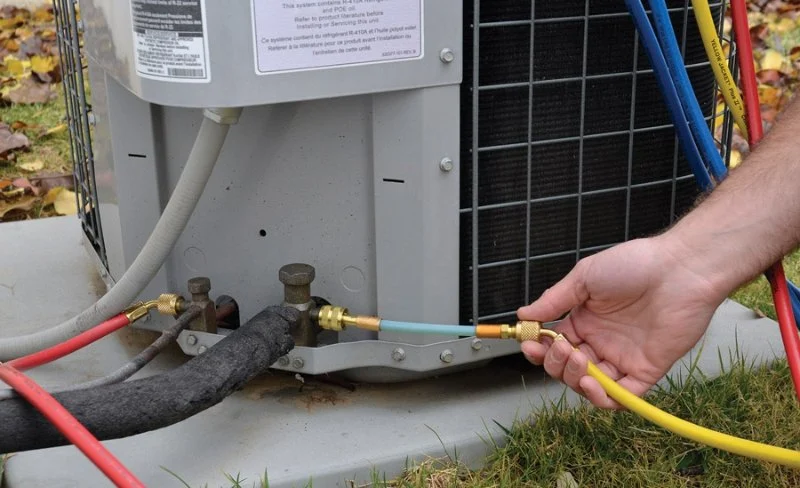
- What Is a Refrigerant Leak in Your Air Conditioner?
- Signs of a Refrigerant Leak
- How to Detect a Refrigerant Leak in Your AC
- How to Fix a Refrigerant Leak
- When to Call a Professional for Refrigerant Leaks
What Is a Refrigerant Leak in Your Air Conditioner?
Refrigerant is the substance responsible for cooling the air in your air conditioning system. If there is a refrigerant leak, your air conditioner can’t function properly, leading to weak or no cooling at all. A refrigerant leak means that the AC is losing the substance necessary for heat absorption, and if the leak is not fixed, it could lead to more severe damage to the system.
Signs of a Refrigerant Leak
Identifying a refrigerant leak early is key to preventing further damage to your air conditioning system. Below are the common signs that your AC may have a refrigerant leak:

1. Reduced Cooling Performance
One of the most obvious signs of a refrigerant leak is poor cooling performance. If your air conditioner isn’t cooling as efficiently as it used to or is blowing warm air, it could be a result of low refrigerant levels due to a leak.
2. Ice Buildup on the Coils
If you notice ice forming on the evaporator coils of your air conditioner, it may indicate a refrigerant leak. This happens because low refrigerant causes the pressure in the system to drop, which in turn causes the temperature to drop below freezing, leading to ice buildup.
3. Hissing or Bubbling Sounds
A hissing or bubbling sound coming from your air conditioner is often a sign that refrigerant is escaping through a leak. If you hear this sound, it’s a good idea to inspect the system for potential issues.
4. Increased Energy Bills
When refrigerant levels are low, your air conditioner has to work harder to achieve the desired temperature. This leads to higher energy consumption, which will reflect in your monthly utility bills.
How to Detect a Refrigerant Leak in Your AC
Once you notice the signs of a refrigerant leak, it’s important to identify the source. There are several ways to detect a refrigerant leak in your AC:
1. Visual Inspection
Begin by performing a visual inspection of your air conditioning unit. Look for signs of oily residue or stains around the coils or refrigerant lines. These marks can indicate where refrigerant has leaked from the system.
2. Use of Soap Solution
A common DIY method for detecting refrigerant leaks is to apply a soapy water solution to the refrigerant lines. If you see bubbles forming where you apply the solution, it’s a clear indication of a leak.
3. Electronic Leak Detectors
For more accurate detection, you can use an electronic refrigerant leak detector. These devices are designed to detect the presence of refrigerant in the air and can help pinpoint the location of the leak. Professional technicians typically use these tools for more precise results.
How to Fix a Refrigerant Leak
Fixing a refrigerant leak requires specific tools and knowledge, but there are steps you can take to address the issue:
1. Locate and Seal the Leak
If you’ve identified a leak using the methods mentioned above, the first step is to seal it. Some leaks can be repaired with epoxy or a special leak-sealing product. However, larger or more severe leaks often require the replacement of parts, such as the evaporator coil or refrigerant line.
2. Recharge the System with Refrigerant
After repairing the leak, you’ll need to recharge the air conditioning system with the appropriate refrigerant. This should only be done by a licensed professional, as handling refrigerants requires special tools and safety precautions. They will ensure the correct amount of refrigerant is added to restore your AC’s cooling power.
3. Test the System
Once the refrigerant has been recharged, test the system to ensure that the leak has been sealed and that the unit is cooling properly. If you notice any issues or signs of further leaks, consult a professional technician for a more thorough inspection.
When to Call a Professional for Refrigerant Leaks
While some minor refrigerant leaks can be fixed with DIY methods, it’s often best to call a professional when dealing with refrigerant issues. Here’s when you should contact an expert:
1. Large or Hard-to-Spot Leaks
If you can’t locate the leak, or if the leak is too large for DIY fixes, it’s time to call a professional. Technicians are trained to find and repair leaks efficiently, ensuring your system works as it should.
2. Recharging Refrigerant
Adding refrigerant to your system requires special equipment and should only be performed by certified technicians. Overcharging or undercharging the system can lead to further damage, so it's best to leave this job to the experts.
3. Ongoing Cooling Issues
If your air conditioner continues to have cooling problems even after you’ve addressed a refrigerant leak, it could indicate other underlying issues that require professional diagnosis and repair.
For expert advice, repair services, and quality products for your AC system, visit Ac Fix for reliable solutions to keep your air conditioner running smoothly and efficiently.

 SMEJKAL ELECTRIC & AIR CONDITIONING4.0 (11 reviews)
 Blowin Cold AC5.0 (123 reviews)
 Sears Heating and Air Conditioning4.0 (499 reviews)
 Airworks Heating and cooling0.0 (0 reviews)
 Rescue Cooling Rentals4.0 (96 reviews)
 Solar Supply LLC4.0 (48 reviews)
 The Ultimate Checklist for Fixing Air Conditioning Successfully
 Who Should You Trust When You Need to Fix Central Air Conditioning?
 How to Diagnose and Repair Common AC Cooling Issues
 Everything You Need to Know Before You Replace Your Air Conditioning
 What to Do When You Need to Fix Air Conditioning Immediately
 The Ultimate Checklist to Fix Air Conditioning Successfully – Expert Tips and Solutions