
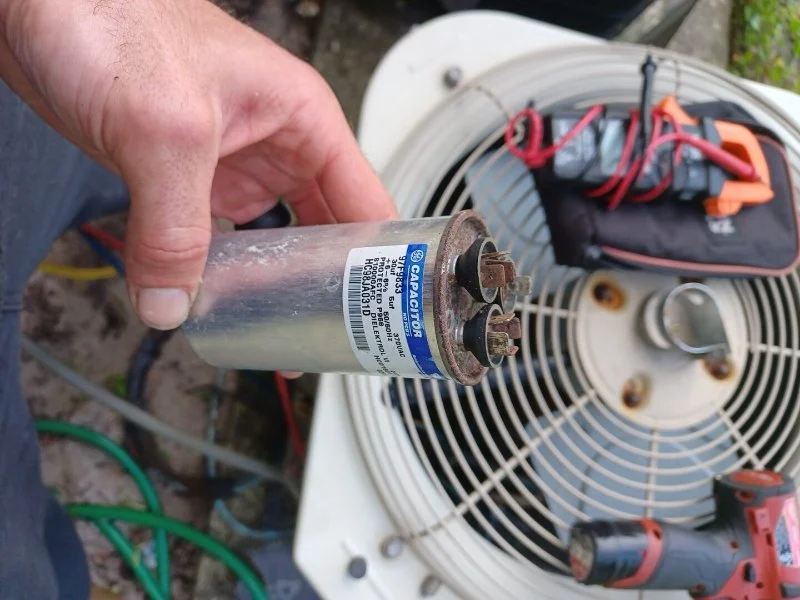
- Understanding the Capacitor in Your Air Conditioner
- Common Symptoms of a Faulty Capacitor
- How to Test Your Air Conditioner's Capacitor
- Repairing or Replacing the Capacitor
- When to Call a Professional
1. Understanding the Capacitor in Your Air Conditioner
The capacitor in your air conditioning unit plays an essential role in the operation of the motor. It stores and releases energy to help the motor start and run efficiently. Without a functioning capacitor, the motor in your air conditioner would be unable to operate properly, leading to performance issues or a complete system failure.
Capacitors are small, cylindrical components located near the compressor and fan motors in an air conditioning unit. They come in two main types: the start capacitor and the run capacitor. The start capacitor helps the motor start up, while the run capacitor ensures continuous power to keep the motor running. If either of these capacitors is faulty, it can affect the entire system.

2. Common Symptoms of a Faulty Capacitor
There are several signs that could indicate a problem with your air conditioner's capacitor. Some of the most common symptoms include:
- AC Unit Fails to Start: If the air conditioner fails to turn on or takes an unusually long time to start, the capacitor may be damaged or worn out.
- Humming Sound: A humming sound coming from the unit without the fan or compressor turning on is often a sign of a malfunctioning capacitor that is failing to provide the necessary power to start the motor.
- AC Blows Warm Air: A faulty capacitor can prevent the compressor from working properly, causing the air conditioner to blow warm air instead of cool air.
- Frequent Tripping of Circuit Breaker: If the capacitor is malfunctioning, it can cause electrical overloads, leading to frequent tripping of the circuit breaker.
These symptoms can indicate that the capacitor is either damaged or not functioning properly. It’s important to address these issues promptly to avoid further damage to your air conditioning system.
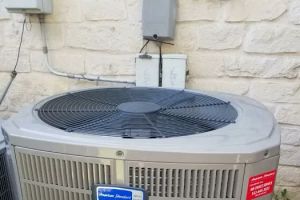
3. How to Test Your Air Conditioner’s Capacitor
If you suspect that your air conditioner's capacitor is faulty, you can perform a simple test to confirm whether it's the cause of the issue. Here’s how you can test the capacitor yourself:
- Turn Off the Power: Before you begin any work on your AC unit, ensure that the power is turned off. Switch off the circuit breaker that supplies power to the air conditioner to avoid any risk of electric shock.
- Locate the Capacitor: Open the access panel on the air conditioner to locate the capacitor. It will be a cylindrical or oval-shaped component, usually near the motor.
- Discharge the Capacitor: Capacitors store electrical energy even when the power is off, so it’s essential to discharge the capacitor before testing. Use a screwdriver with an insulated handle to short the terminals and safely discharge the capacitor.
- Test with a Multimeter: Set your multimeter to the capacitance setting (usually marked as “CAP” or “uF” for microfarads). Touch the multimeter probes to the capacitor terminals. A good capacitor will show a reading within the manufacturer’s specifications (usually listed on the capacitor itself). If the reading is too low or there’s no change, the capacitor is faulty and needs to be replaced.
If the capacitor is reading outside the recommended range, it’s time to replace it. However, if the multimeter shows no reading at all, this could indicate a completely dead capacitor.
4. Repairing or Replacing the Capacitor
Once you’ve confirmed that the capacitor is faulty, the next step is either to repair or replace it. In most cases, replacing the capacitor is the best solution, as capacitors are generally inexpensive and easy to replace. Here’s how you can proceed:
- Purchase a New Capacitor: Look for a replacement capacitor with the same specifications as the old one. You can find capacitors at most hardware stores or online. Make sure to check the voltage and microfarad (uF) rating to match the original part.
- Remove the Old Capacitor: Once you have the replacement capacitor, carefully remove the old one from the unit. Take note of how the wires are connected to the capacitor so that you can install the new one in the same way.
- Install the New Capacitor: Attach the new capacitor to the wires, ensuring the connections are tight and secure. Reinstall the capacitor into its housing and reassemble the air conditioner’s access panel.
- Test the System: Turn the power back on and test the air conditioner to ensure that the fan and compressor are working correctly. If the air conditioner starts up normally and cools the air, the repair was successful.
While replacing a capacitor is relatively simple, if you’re unsure or uncomfortable with performing this task yourself, it’s advisable to call a professional technician to handle the replacement for you.
5. When to Call a Professional
While replacing a capacitor is a manageable DIY task, there are times when you should call in a professional. If the issue persists after replacing the capacitor, or if you suspect a more significant problem with your air conditioning system, it’s best to consult an HVAC technician. Some situations where you may need a professional include:
- Repeated Capacitor Failure: If the capacitor continues to fail after replacement, it may indicate a deeper electrical issue within the AC unit that requires professional inspection.
- Complex Electrical Problems: If you're not confident working with electrical components, it’s safer to hire an expert who can handle the complex parts of the repair.
- Inability to Diagnose the Problem: If you're unable to determine the root cause of the issue, a technician can thoroughly diagnose the problem and prevent further damage to your system.
Professional HVAC technicians have the experience and knowledge to troubleshoot and fix complex air conditioning problems, ensuring that your system runs efficiently and safely.
 Freeze The Heat Air Conditioning & Duct Cleaning5.0 (137 reviews)
 Home Comfort Heating and Cooling Llc.5.0 (6 reviews)
 MetroPower, Inc.4.0 (38 reviews)
 Mid Florida A/C4.0 (597 reviews)
 Logic Mechanical Inc4.0 (4 reviews)
 Cams Mechanical LLC4.0 (9 reviews)
 How Much Does It Really Cost to Fix an AC Unit in the US?
 How to Solve Low Refrigerant Levels in Your Air Conditioner Unit
 How Much Does It Really Cost to Fix Air Conditioning?
 How to Repair Air Conditioner Issues Without the Help of a Technician
 How Long Should It Take to Fix Air Conditioner? | AC Fix
 What to Do When You Need to Fix My Air Conditioner Immediately