
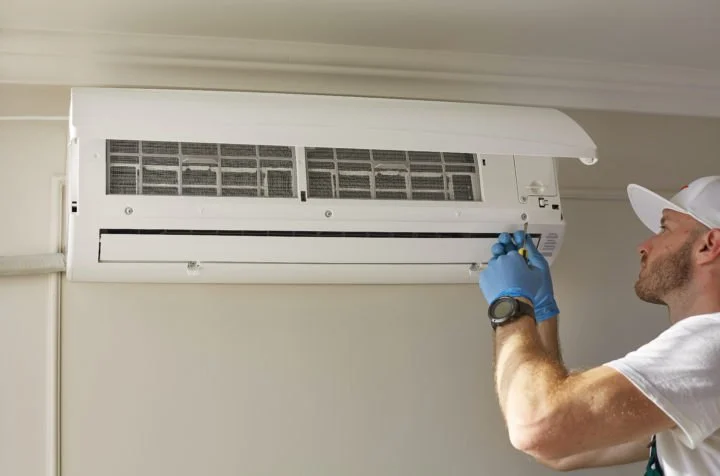
- 1 - Understanding Common AC Problems
- 2 - Signs Your AC Needs Repair, Not Replacement
- 3 - Repairing vs. Replacing: What’s Best for Your AC
- 4 - DIY Fixes You Can Try Before Calling a Professional
- 5 - When to Call a Professional for AC Repair
1 - Understanding Common AC Problems
Air conditioning units, like all appliances, can experience problems over time. However, not every issue requires a full system replacement. Many common AC problems can be repaired without the need for a complete overhaul. Understanding these problems will help you decide whether a repair or replacement is necessary.

1.1 - Low Refrigerant Levels
One of the most common issues with central air conditioning units is low refrigerant levels. This can occur due to leaks or normal wear over time. If your AC is blowing warm air or not cooling efficiently, low refrigerant could be the cause. Fortunately, this is often a simple fix that doesn’t require replacing the entire system, just refilling or repairing the leak.

1.2 - Clogged Air Filter
A clogged air filter can restrict airflow, causing your AC to struggle to cool your home. This is a common, easy-to-fix issue. Simply replacing or cleaning the air filter can improve performance, without the need for a new AC system.
1.3 - Thermostat Issues
If your AC isn’t turning on or is malfunctioning, the thermostat may be the culprit. Thermostat problems are typically easy to repair, and may only require recalibration or replacing the thermostat itself. This doesn’t mean you need to replace the entire air conditioning unit.
2 - Signs Your AC Needs Repair, Not Replacement
How can you tell if your air conditioning unit can be repaired rather than replaced? Below are signs that it’s often possible to fix your AC rather than invest in a costly new system.
2.1 - Inconsistent Cooling
If your AC is producing inconsistent cooling, it could be due to a simple issue like a clogged air duct or refrigerant leak. These problems are often fixable without replacing the entire system. Regular maintenance can also help prevent this issue from recurring.
2.2 - Unusual Noises
Noises such as grinding, squealing, or rattling often indicate a problem with your AC’s components. These sounds could point to a worn-out fan belt, loose parts, or a dirty compressor. While these issues are annoying, they can usually be repaired without replacing the entire unit.
2.3 - Weak Airflow
If your AC is blowing air but the airflow is weak, the issue could be related to a blocked or broken fan, or the evaporator coils might be dirty. These issues are common and often repairable, meaning you don’t need to replace the whole system.
3 - Repairing vs. Replacing: What’s Best for Your AC
Deciding whether to repair or replace your central AC can be a tough choice. Here’s a guide to help you make an informed decision:
3.1 - Age of Your AC System
If your AC unit is over 10-15 years old, it may be more cost-effective to replace it, especially if you’ve had to make frequent repairs. Newer models are more energy-efficient and come with modern features that can reduce long-term costs.
3.2 - Cost of Repair
As a general rule, if the cost of repair is less than 50% of the cost of a new system, repairing your AC makes sense. If the cost of fixing your unit is near the cost of a new one, you may want to consider upgrading to a more efficient model.
3.3 - Energy Efficiency
Older AC systems tend to be less energy-efficient, leading to higher utility bills. If your current system is costing more to run than a new, energy-efficient model, replacement may be a better option. However, if the issue is minor, a repair could be all that’s needed to restore efficiency.
4 - DIY Fixes You Can Try Before Calling a Professional
Before calling in a professional, there are a few simple DIY fixes that can help restore your AC’s performance. However, always ensure you are comfortable and safe when attempting these repairs:
4.1 - Replacing the Air Filter
A clogged air filter can reduce airflow and cause your system to overheat. Replacing the air filter is one of the simplest maintenance tasks you can do yourself to keep your AC running smoothly.
4.2 - Cleaning the Condenser Coils
Dirty condenser coils can reduce your AC’s efficiency. Cleaning the coils with a soft brush or using a vacuum to remove debris can help your system run more efficiently, extending its life.
4.3 - Checking for Refrigerant Leaks
If you notice warm air coming from your AC, you may have a refrigerant leak. While recharging refrigerant requires professional equipment, you can check for visible signs of a leak around the connections and pipes. If you suspect a leak, it's best to call a professional for a proper fix.
5 - When to Call a Professional for AC Repair
While DIY repairs can solve some minor issues, it’s important to call a professional when the problem is more complex or when you’re unsure of how to proceed. Here’s when you should call in a pro:
5.1 - Electrical Issues
If you’re experiencing electrical problems, such as a tripped circuit breaker or a malfunctioning thermostat, it’s best to call a licensed technician. Electrical work can be dangerous if not done correctly.
5.2 - Persistent Leaks or Poor Cooling
If your AC is still not cooling properly after replacing the filter or cleaning the coils, or if you notice persistent leaks, it’s time to contact a professional. They will be able to assess whether the issue requires repairs or a replacement.
If you’re in need of expert advice, products, or services for your air conditioning unit, visit Ac Fix for the best solutions and reliable support tailored to your needs.



 Iron City Heating and Air, Inc4.0 (38 reviews)
 Charlie's Heating & Air5.0 (2 reviews)
 Home Services at The Home Depot4.0 (9 reviews)
 Langley Heating and Air, Inc. Wake Forest, NC.5.0 (259 reviews)
 Twin Enterprise HVAC Division0.0 (0 reviews)
 SOS Air Conditioning, Heating & Electrical5.0 (29 reviews)
 Complete Guide: Fix AC Unit for Homeowners in 2025
 What to Do When You Need to Fix Air Conditioning Immediately | Ac Fix
 Best Air Conditioner Repair Services Near You Today | AC Fix
 Can You Fix an AC Condenser Without Replacing the Entire System? Insights and Solutions
 How Long Should It Take to Fix an Air Conditioner? Time Expectations and Common Issues
 How to Fix Your AC Without Spending a Fortune: Expert Tips & DIY Solutions