
- Understanding the AC Control Board
- Signs of a Faulty Control Board
- Steps to Repair a Faulty AC Control Board
- When to Replace the Control Board
- When to Call a Professional
Understanding the AC Control Board
The control board in your air conditioner (AC) is the "brain" of the HVAC system. It communicates with various components such as the compressor, fan, and thermostat, directing them to work in harmony to regulate temperature and airflow. When the control board malfunctions, the entire system can fail to operate properly, leading to inconsistent cooling or complete breakdowns.
The control board houses several crucial relays, fuses, and capacitors that allow the AC to function efficiently. A faulty control board can cause symptoms like the unit not turning on, inconsistent cooling, or system failures. Understanding how the control board works can help you identify problems and guide you through troubleshooting steps.
Signs of a Faulty Control Board
A malfunctioning control board can cause a variety of issues, and recognizing the signs early on can help prevent more significant damage. Here are common signs that your AC control board may be faulty:
- System Not Turning On: If the air conditioner doesn’t power up at all, it could be a sign that the control board has failed to send the proper signals to the components.
- Inconsistent Cooling: If your AC is blowing warm air or not cooling properly, the control board may not be regulating the airflow or compressor effectively.
- Error Codes or Flashing Lights: Many modern HVAC systems have error codes or flashing lights on the control panel. These codes can point to issues with the control board.
- Frequent Cycling: If the unit frequently turns on and off without completing a cooling cycle, it could be a malfunction in the control board’s relay function.
Steps to Repair a Faulty AC Control Board
If you've identified that the control board is the issue, you can follow these steps to troubleshoot and potentially fix the problem:

Step 1: Turn Off the Power
Before starting any repair work, it’s essential to disconnect power to the unit to avoid any electrical hazards. Locate the circuit breaker for your AC unit and switch it off.
Step 2: Inspect the Control Board
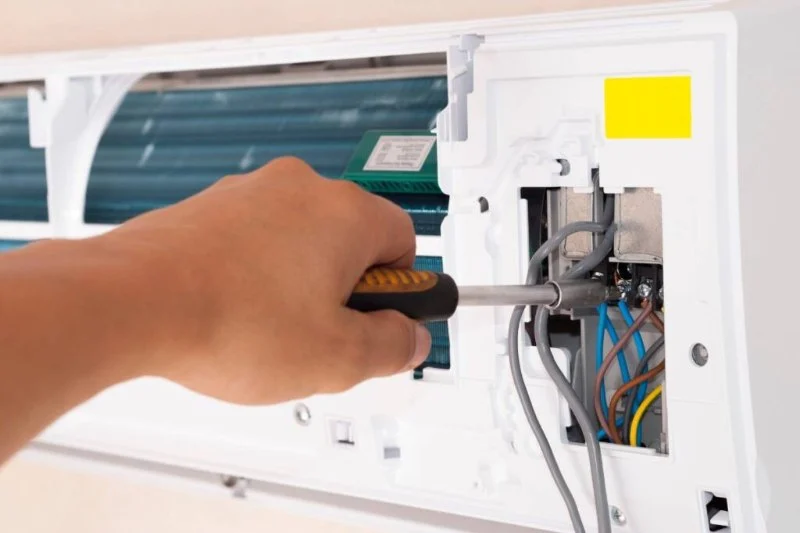
Once the power is off, remove the access panel to expose the control board. Visually inspect the board for any signs of damage such as burnt components, loose wires, or signs of corrosion. If you notice any obvious issues, this may confirm that the control board is the culprit.
Step 3: Check the Fuses and Relays
Faulty fuses or relays can cause issues with the control board. Using a multimeter, check the continuity of the fuses and relays. If they’re defective, replace them with the correct parts. This may resolve the issue without needing to replace the entire control board.
Step 4: Replace the Control Board (if Necessary)
If the control board is beyond repair, you’ll need to replace it. Order a replacement control board that matches your air conditioner's make and model. Carefully disconnect all the wires from the faulty control board and connect them to the new one, ensuring all connections are secure. Follow the manufacturer’s instructions for installation to avoid errors.
When to Replace the Control Board
In some cases, repairing the control board may not be feasible, especially if the components are too damaged. If the control board shows signs of severe wear or if the repairs are too costly, replacing it with a new one might be the best option.
Replacing the control board is often more cost-effective than replacing the entire AC unit, especially if the unit is relatively new. Make sure to consult with a professional if you’re unsure about the severity of the issue or the cost of replacement.
When to Call a Professional
While repairing the control board is possible for DIY enthusiasts, it’s important to know when to call a professional. If you're unable to diagnose the issue, or if you're uncomfortable working with electrical components, it’s always safer to seek professional help.
Additionally, some issues may involve more complex components of the HVAC system that require expert knowledge to fix. A qualified HVAC technician can also ensure that the replacement control board is properly installed and calibrated, which can prevent future issues and prolong the life of your AC system.
For more information on air conditioner repairs, replacement parts, and services, visit Ac Fix for all the resources you need.
 Frankie's Air Conditioning & Heating5.0 (7 reviews)
 Refrigeration Solutions LLC5.0 (3 reviews)
 DIRECT HVAC LLC5.0 (3 reviews)
 Coastal Supply Co. Parts4.0 (69 reviews)
 Smith Heating and Air4.0 (61 reviews)
 Integrity Home Solutions4.0 (2087 reviews)
 How to Solve Air Conditioner Problems Caused by Low Refrigerant
 Experts Explain How to Fix Wall Air Conditioner Like a Pro
 What You Need to Know About Air Conditioner Filter Replacement
 Top Ways to Fix Wall Air Conditioner Quickly and Affordably in Your Area
 How Much Does It Really Cost to Fix Air Conditioning Leak?
 The Ultimate Checklist to AC Fix Successfully: Expert Tips and Tricks